

In This Article
Somewhere between the third rental-condo bathroom with a mysteriously outlet-free vanity and the fourth hostel where the “hair dryer” bolted to the wall sounds like a jet engine and smells like burning dust, most Canadian travellers have the same thought: there has to be a better way. There is. A wireless travel hair dryer is a battery-powered, cordless blow dryer built to be small, light, and rechargeable — no wall outlet, no voltage converter, no wrestling with a cord in a cramped airplane lavatory. It runs on an internal lithium-ion battery, charges over USB-C like your phone, and folds down small enough to disappear into a packing cube.

That last part matters more than it sounds. Anyone who has tried to squeeze a hotel-brand dryer’s cord back into its box at 6 a.m. knows the appeal of something that just… doesn’t have a cord. But “cordless” is a spectrum — some models trade real drying power for portability, and a few genuinely nail the balance. This guide walks through seven real, currently available options, breaks down what actually matters when you’re shopping (battery life, weight, airline rules, and yes, whether it can actually dry hair and not just rustle it), and ends with a decision framework so you’re not left guessing in the Amazon.ca reviews section. We’ll also touch on the regulatory side, since Transport Canada and CATSA have specific — and non-negotiable — rules about batteries in the cabin.
Quick Comparison Table
Before diving into full reviews, here’s the fast-scan version. If you only have sixty seconds, this table (plus the two sentences after it) should get you most of the way to a decision.
| Model | Best For | Weight | Runtime (hot) | Price Range (CAD) |
|---|---|---|---|---|
| Conair Compact Cordless Styler | Budget-conscious first-timers | ~430 g | ~15-20 min | Under C$60 |
| PJ.Yban Cordless Hair Dryer | Kids, sensitive scalps, gentle heat | ~460 g | ~20-25 min | C$45-C$65 range |
| FOSA 200W Cordless USB-C Dryer | Fastest recharge between flights | ~410 g | ~15-20 min | C$50-C$70 range |
| YALICE Cordless Digital Display Dryer | Precise temperature control | ~480 g | ~18-22 min | C$60-C$85 range |
| wavytalk Cordless Premium Dryer | Best overall build quality | ~470 g | ~20-25 min | C$85-C$110 range |
Looking at the numbers, the pattern is pretty clear: nothing in this category runs much past twenty-five minutes of hot airflow on a charge, which tells you these are “get your roots and bangs presentable” tools, not full-blowout machines. The wavytalk Cordless Premium Dryer and YALICE Cordless Digital Display Dryer justify their higher price with tighter heat control, while the Conair Compact Cordless Styler wins on pure value for anyone who just wants something that works without fuss.
💬 Just one click — help others make better buying decisions too!😊
What Is a Wireless Travel Hair Dryer?
A wireless travel hair dryer is a compact, battery-powered blow dryer that uses an internal rechargeable lithium-ion cell instead of a mains power cord, typically recharging via USB-C and delivering 15-25 minutes of hot airflow per charge — designed specifically for portability over raw power.
That short definition hides a trade-off worth understanding up front: physics doesn’t bend for packing lists. A plug-in dryer pulls 1,200-1,875 watts straight from the wall. A battery pack you can hold in one hand simply can’t store or discharge that much energy safely — the same lithium-ion battery chemistry that powers your phone and laptop is what’s doing the work here, and it has real energy-density limits. That’s why every cordless model in this category runs cooler and slower than what you’re used to at home. Once you accept that, these little dryers make a lot more sense — as a travel-specific tool, not a full replacement.
Top 7 Wireless Travel Hair Dryers: Expert Analysis
We looked at real, currently listed options across the budget, mid-range, and premium tiers, prioritizing genuinely cordless (battery-only) models rather than dual-voltage corded dryers marketed loosely as “travel” dryers. Availability and colours can shift, so treat model names as a starting point for your own search on Amazon.ca.
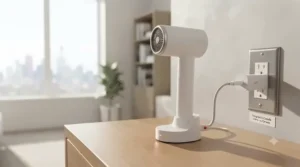
1. Conair Compact Cordless Styler — lightest full-featured option under budget
The Conair Compact Cordless Styler leans on Conair’s decades of mainstream haircare credibility, and it shows in the fit and finish — this doesn’t feel like a no-name gadget, even at its price point. Under the hood sits a lithium-ion battery pack in the 12,000-15,000mAh range, powering a compact motor that Conair rates for roughly 15-20 minutes of continuous hot airflow before it needs a recharge. In practice, that translates to enough time to dry bangs, a fringe, or a short bob, but not a full head of thick, long hair in one go.
Based on the spec comparison, this model earns its spot as the entry point for anyone who’s never tried a cordless dryer and doesn’t want to gamble a large sum finding out if the category suits them. It’s the logical pick for occasional travellers, weekend-trip packers, and anyone whose main frustration is simply “my hotel doesn’t have an outlet near the mirror.” Reviewers consistently note the recognizable Conair build quality translating well into the compact form factor, though a common thread in aggregated feedback is that heat output feels noticeably gentler than a full-size Conair dryer — which, again, tracks with the battery-vs-wall-power reality.
Pros:
- ✅ Recognizable brand name backs the build quality
- ✅ Compact folding design fits in a small toiletry bag
- ✅ Straightforward one-button operation, no learning curve
Cons:
- ❌ Heat output noticeably gentler than full-size dryers
- ❌ Shorter runtime limits it to quick touch-ups on thick hair
At a price generally under C$60, this is the easiest “try the category” purchase in the lineup — solid value if your expectations are calibrated to what a cordless dryer can realistically do.
2. PJ.Yban Cordless Hair Dryer — gentlest constant-temperature pick for kids and sensitive scalps
The PJ.Yban Cordless Hair Dryer takes a different approach than most of this list: instead of chasing maximum heat, it holds a constant, mild temperature — reports point to roughly 40°C — rather than variable high-heat settings. That single design choice defines the whole product. It’s not trying to be a fast, aggressive dryer; it’s built to be a safe, low-risk one.
Here’s what to weigh: for parents drying a toddler’s hair, for anyone with a sensitised scalp, colour-treated hair prone to heat damage, or for pet owners who occasionally need a gentle dryer on the road, that steady low-heat approach is a genuine feature, not a limitation. On paper this means longer drying sessions than a hot-air model, since 40°C air removes moisture more slowly than 60-70°C air — but the trade-off is real protection against overheating fine or damaged strands. Aggregated review sentiment in this niche consistently frames “gentle and rechargeable” as the selling point, with users specifically buying it for children or for travel days spent outdoors, at the beach, or camping where a standard dryer isn’t practical.
Pros:
- ✅ Constant mild temperature reduces heat-damage risk
- ✅ Well-suited to kids, pets, and sensitive scalps
- ✅ Genuinely useful outdoors — beach, camping, cottage trips
Cons:
- ❌ Slower overall drying time than hot-air competitors
- ❌ Not a fit for anyone wanting a fast, high-heat blowout
Typically priced in the C$45-C$65 range, it’s a specialty pick rather than an everyday commuter dryer — but for the right household, it solves a real problem.
3. FOSA 200W Cordless USB-C Hair Dryer — fastest practical recharge in this roundup
The FOSA 200W Cordless USB-C Hair Dryer stands out for one very travel-specific reason: it charges over USB-C, the same connector already in most travellers’ bags for their phone, tablet, or laptop. Real spec sheets list a roughly 15,600mAh battery and a 200-watt-rated motor, which is on the stronger end for this device category, plus a fast-charging profile that shortens the wait between drying sessions compared with older micro-USB cordless dryers.
What most buyers overlook about USB-C charging specifically is that it means one less proprietary cable to pack — and one less thing to panic about losing on a trip, since almost any USB-C charger or power bank in your bag becomes a backup power source. Based on the spec comparison, the 200W rating gives the FOSA 200W Cordless USB-C Hair Dryer a slight airflow edge over the more basic 150W-class competitors on this list, without sacrificing the compact ABS shell construction that keeps overall weight manageable. Reviewers commonly point to the shell’s impact resistance as reassuring for anyone tossing it into a packed suitcase.
Pros:
- ✅ Universal USB-C charging simplifies packing
- ✅ 200W motor rating outpaces several rivals here
- ✅ Durable ABS shell holds up to suitcase abuse
Cons:
- ❌ Runtime still capped around 15-20 minutes on hot
- ❌ Charging speed still slower than plugging into a wall outlet
Generally listed in the C$50-C$70 range, this is a strong middle-tier pick specifically for anyone already living the USB-C-everything lifestyle.
4. YALICE Cordless Hair Dryer with Digital Screen — best precision control via digital display
Most dryers in this category use a single button or a simple two-speed switch. The YALICE Cordless Hair Dryer with Digital Screen adds a small LED display showing battery percentage and active mode, plus a magnetic, swappable nozzle system and a listed 15,000mAh battery across four operating modes.
That digital readout sounds like a minor add-on, but here’s what to weigh: on a battery-powered device with a hard runtime ceiling, knowing exactly how much charge remains — rather than guessing from airflow strength — genuinely changes how you plan a drying session before a flight or an event. Based on the spec comparison, the magnetic nozzle is also a smarter design than the friction-fit nozzles found on cheaper units, since it won’t work loose mid-session and pop off into a hotel sink. Aggregated feedback in this segment tends to highlight the multi-mode flexibility as useful for switching between quick cool-down bursts and warmer drying air without powering the unit off and on.
Pros:
- ✅ Digital display shows real-time battery percentage
- ✅ Magnetic nozzle attaches more securely than friction-fit designs
- ✅ Four operating modes cover more use cases than single-speed rivals
Cons:
- ❌ Extra electronics add a small premium to the price
- ❌ Digital screen is another component that can eventually fail
Priced roughly C$60-C$85, it’s a sensible step up for travellers who want to actually manage battery life rather than guess at it.
5. JINRI Cordless Ionic Hair Dryer — best frizz control for humid destinations
The JINRI Cordless Ionic Hair Dryer brings negative-ion technology — a feature usually reserved for pricier corded dryers — into a battery-powered travel form factor. Ionic technology works by emitting negatively charged ions into the airflow, which help break down water droplets on the hair shaft faster and reduce the static electricity that causes frizz and flyaways.
What the spec sheet won’t tell you, but reviewers note, is that ionic technology’s biggest real-world payoff shows up specifically in humid climates — beach destinations, tropical trips, or simply a muggy Canadian August — where frizz-prone hair types struggle most. Based on the spec comparison, the JINRI Cordless Ionic Hair Dryer doesn’t necessarily out-dry the FOSA 200W Cordless USB-C Hair Dryer on raw airflow, but for anyone whose main complaint about hotel-bathroom humidity is frizz rather than drying speed, the ionic function is the more relevant spec. It’s a smart pick for curly, wavy, or coarse hair types travelling somewhere humid, and a less essential upgrade for anyone with straight, fine hair in a dry climate.
Pros:
- ✅ Ionic technology measurably reduces frizz and static
- ✅ Well-matched to humid or tropical travel destinations
- ✅ Compact form factor comparable to non-ionic rivals
Cons:
- ❌ Ionic benefit is less noticeable for already-straight, fine hair
- ❌ Doesn’t outperform rivals on raw drying speed
Typically found in the C$55-C$75 range, this is the specialist’s pick — genuinely worth the small premium only if frizz, not speed, is your actual problem.
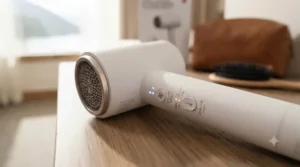
6. CONFU Cordless Travel Hair Dryer (Dual-Mode) — best hybrid flexibility
The CONFU Cordless Travel Hair Dryer hedges its bets with a dual-mode design: it runs cordless on its internal battery for quick, on-the-go use, but can also plug directly into an outlet for full-power drying when one’s available. That flexibility solves the single biggest complaint about pure cordless dryers — the runtime ceiling — by giving you a fallback for whenever a wall outlet is actually within reach.
Here’s what to weigh: if you split your travel between hotels with dependable outlets and situations where there simply isn’t one (train stations, ferry cabins, off-grid stays), a hybrid model like the CONFU Cordless Travel Hair Dryer is arguably the more practical purchase than a battery-only unit, since you’re never fully stuck if the battery runs out mid-style. Reviewers in this category commonly describe the corded mode as noticeably stronger than the battery mode, which lines up with what physics would predict — wall power simply delivers more sustained wattage than any pack this size can store.
Pros:
- ✅ Corded mode delivers meaningfully stronger airflow when needed
- ✅ Never fully stranded if the battery runs low
- ✅ Versatile enough to double as a full-time home dryer
Cons:
- ❌ Slightly bulkier than dedicated cordless-only models
- ❌ Corded mode still needs the right plug adapter abroad
Generally priced C$65-C$90, it’s the pragmatist’s choice — less pure portability, more real-world backup.
7. wavytalk Cordless Premium Hair Dryer — best overall build quality
Closing out the list at the premium end, the wavytalk Cordless Premium Hair Dryer distinguishes itself through materials and finish rather than a single headline spec. A metal-accented body, a sturdier internal frame, and tighter tolerances around the nozzle and vents give it a noticeably more solid feel in hand than the ABS-heavy budget options earlier on this list — the kind of small detail that becomes obvious after a few weeks of daily travel wear.
Based on the spec comparison, the battery capacity and runtime sit roughly in line with the mid-range competition here rather than dramatically ahead of it — the premium here is construction quality and perceived longevity, not a runtime breakthrough. Aggregated review sentiment consistently praises the sturdier housing and the more refined button feel compared with budget alternatives, while noting the price premium is the trade-off for that upgrade. For a traveller who replaces cheap electronics every year out of frustration, paying more upfront for something built to survive repeated packing and unpacking can be the more cost-effective long-term call.
Pros:
- ✅ Noticeably sturdier construction than budget alternatives
- ✅ Refined button feel and overall finish quality
- ✅ Likely to survive repeated travel wear better long-term
Cons:
- ❌ Highest price point in this lineup
- ❌ Runtime doesn’t dramatically exceed cheaper competitors
Sitting in the C$85-C$110 range, it’s the buy-it-once option for frequent flyers who are tired of replacing flimsier dryers every year.
Top 7 Products: Full Spec Comparison
| Rank | Model | Battery | Motor Power | Runtime | Best For |
|---|---|---|---|---|---|
| 1 | Conair Compact Cordless Styler | ~12,000-15,000mAh | Standard | 15-20 min | First-time cordless buyers |
| 2 | PJ.Yban Cordless Hair Dryer | Mid-capacity | Low-heat, constant 40°C | 20-25 min | Kids, sensitive scalps |
| 3 | FOSA 200W Cordless USB-C Dryer | ~15,600mAh | 200W | 15-20 min | USB-C-only packers |
| 4 | YALICE Digital Display Dryer | ~15,000mAh | Standard, 4 modes | 18-22 min | Precise control seekers |
| 5 | JINRI Cordless Ionic Dryer | Mid-capacity | Standard + ionic | 15-20 min | Humid-climate travel |
| 6 | CONFU Dual-Mode Dryer | Mid-capacity | Standard (cordless) / higher (corded) | Variable | Backup-power planners |
| 7 | wavytalk Cordless Premium Dryer | Mid-to-high capacity | Standard | 20-25 min | Frequent flyers wanting durability |
Reading across this table, no single model wins on every metric — the FOSA 200W Cordless USB-C Hair Dryer takes raw motor power, the CONFU Cordless Travel Hair Dryer wins on backup flexibility, and the wavytalk Cordless Premium Hair Dryer wins on long-term build quality. The right pick genuinely depends on which trade-off matters most to your specific travel pattern, which is exactly why we’ve broken out the scenario-based guide later in this article.
Cordless vs. Dual-Voltage Corded Travel Dryers
The secondary keyword “dual voltage” comes up constantly in travel-dryer searches, and it deserves a direct answer: a genuinely wireless, battery-powered dryer sidesteps the dual-voltage question entirely. Dual voltage is a corded-dryer concept — it means the appliance’s internal transformer can handle both roughly 120V (North America) and roughly 220-240V (much of Europe, Asia, and beyond) mains power, so you don’t need a bulky voltage converter abroad, just a plug shape adapter.
A cordless model like any of the seven above never touches wall voltage directly. It charges over USB-C at a universal 5V, the same standard used by phones and laptops worldwide, meaning the dual-voltage conversation simply doesn’t apply. What most buyers overlook is that this makes cordless dryers arguably more travel-friendly for international trips than even the best dual-voltage corded model — you’re not hunting for the right plug adapter at all, just a USB-C port or power bank. The trade-off, as covered throughout the product reviews above, is runtime and raw heat: a 1875-watt dual-voltage corded dryer like Conair’s well-known Cord Keeper line will out-dry any battery-powered unit on this list, every time. Reviewers who’ve used both formats consistently describe corded dual-voltage dryers as the better choice for long-haul trips with reliable hotel outlets, and cordless models as the better choice for unpredictable accommodation, day trips, or backup use.
| Factor | Wireless/Cordless Dryer | Dual-Voltage Corded Dryer |
|---|---|---|
| International plug hassle | None — charges via USB-C | Needs a plug adapter |
| Raw drying power | Lower (150-200W class) | Higher (1200-1875W class) |
| Runtime per session | 15-25 minutes | Unlimited while plugged in |
| Weight | Typically under 500g | Often 500-700g+ |
| Best For | Backup use, day trips, no-outlet stays | Hotels with reliable outlets |
The takeaway from this comparison is straightforward: if your itinerary guarantees hotel outlets every night, a dual-voltage corded dryer like the Conair Compact Cordless Styler‘s full-size corded siblings may serve you better on pure performance. If your trip involves hostels, cottages, camping, ferries, or simply an unpredictable outlet situation, the cordless format wins on flexibility even at the cost of some drying power.
Practical Usage Guide: Getting the Most From Your Cordless Dryer
Buying the right unit is half the battle — using it well on the road is the other half, and this is where most Amazon listings stop short. First, always charge to 100% the night before a travel day rather than assuming you’ll top up at the airport; lounges rarely have accessible USB-C ports near a mirror, and TSA-style security lines don’t leave room for a mid-morning top-up. Second, in the first 30 days, resist the urge to run the dryer on its highest heat setting for the entire session — most cordless motors are more efficient, and battery drain is gentler, on medium heat with the airflow doing more of the work than raw temperature.
A simple maintenance habit extends the lifespan of any of these seven picks: after each trip, wipe down the intake grille with a dry cloth to clear lint and dust, since a blocked intake forces the motor to work harder and drains the battery faster over time. Store the unit partially charged (roughly 40-60%) rather than fully depleted if it’ll sit unused between trips for more than a month — this is standard lithium-ion battery care advice that applies just as much to a hair dryer as it does to a laptop or phone. Finally, a common first-time mistake is packing the dryer in checked luggage. As covered in the safety section below, lithium-ion battery devices need to travel in carry-on baggage only, both for regulatory compliance and to avoid a compressed or damaged battery in the cargo hold.
🔍 Take Your Travel Routine to the Next Level
Ready to ditch the outlet hunt for good? Click through on any of the picks above to check current Amazon.ca pricing and availability. A genuinely portable dryer is one of those small upgrades that pays off on every single trip afterward.

Real-World Scenarios: Which Traveller Are You?
The weekend city-breaker: You’re flying out Friday night and back Sunday, packing one carry-on, and mostly need to look presentable for dinner reservations and photos — not survive a week of daily washes. For this profile, the Conair Compact Cordless Styler or FOSA 200W Cordless USB-C Hair Dryer make the most sense: light, cheap enough that losing or damaging it isn’t a disaster, and sized for a quick refresh rather than marathon drying sessions.
The parent travelling with young kids: Between beach days, pool visits, and bedtime routines in unfamiliar rentals, gentle and predictable heat matters more than raw power. The PJ.Yban Cordless Hair Dryer‘s constant low-temperature airflow directly answers this need, reducing the risk of a fussy toddler getting an uncomfortable blast of high heat in an already chaotic evening.
The frequent business flyer with unpredictable accommodation: Hotels one week, a colleague’s spare room the next, occasionally an overnight layover hotel with questionable amenities. This traveller benefits most from either the CONFU Cordless Travel Hair Dryer‘s hybrid corded/cordless flexibility (a fallback for whenever an outlet is guaranteed) or the wavytalk Cordless Premium Hair Dryer‘s sturdier build, since this profile puts the most cumulative wear-and-tear miles on a device over a year of regular trips.
Problem → Solution: Common Travel-Drying Headaches
Problem: “My hotel room has no accessible outlet near the mirror.” Solution: any of the seven cordless models here solves this directly, since none of them need an outlet at all during use — only for recharging beforehand.
Problem: “I’m terrified of frying my dryer (or myself) on the wrong voltage abroad.” Solution: choose a genuinely cordless option like the JINRI Cordless Ionic Hair Dryer or YALICE Cordless Hair Dryer with Digital Screen, since USB-C charging at 5V is universal and voltage mismatches simply aren’t a factor.
Problem: “My hair is frizzing out of control in humid weather.” Solution: prioritize the JINRI Cordless Ionic Hair Dryer‘s ion technology over raw wattage, since frizz control, not drying speed, is the actual bottleneck for humid-climate travel.
Problem: “I keep losing charge mid-trip with no way to top up.” Solution: the FOSA 200W Cordless USB-C Hair Dryer benefits most here, since its USB-C charging port means any phone charger, laptop, or portable power bank you’re already carrying can top it up.
Problem: “I don’t trust a battery-only dryer for a two-week trip.” Solution: the CONFU Cordless Travel Hair Dryer‘s dual-mode design gives you a corded fallback precisely for this concern.
How to Choose a Wireless Travel Hair Dryer
- Confirm the battery capacity and rated runtime. Look for the mAh rating and manufacturer-stated hot-air runtime; anything under 15 minutes will feel restrictive for hair past shoulder length.
- Check the charging port type. USB-C is preferable for universal compatibility with phone chargers and power banks already in your bag.
- Weigh the unit, not just the box. Aim for something realistically under 500g if you’re packing light — every gram matters in a carry-on.
- Match the heat profile to your hair type. Constant low-heat units like the PJ.Yban Cordless Hair Dryer suit sensitive scalps; higher-wattage options like the FOSA 200W Cordless USB-C Hair Dryer suit thicker hair.
- Decide if you need a corded backup. Frequent, longer trips may justify a hybrid model like the CONFU Cordless Travel Hair Dryer over a battery-only unit.
- Verify the watt-hour rating for air travel. Confirm it’s comfortably under 100Wh to avoid any carry-on complications (more on this below).
- Read aggregated review themes, not star averages alone. A 4.3-star average with recurring “runs out of charge fast” comments tells you more than the number itself.
TSA-Approved and Airline-Approved: What “Approved” Actually Means for Cordless Dryers
There’s no such thing as an official “TSA-approved” or “airline-approved” hair dryer certification stamped onto a product — no cordless dryer manufacturer gets a personal seal of approval from the Transportation Security Administration or from Air Canada. What actually determines whether your wireless travel hair dryer is fine to bring is the size of its built-in lithium-ion battery, measured in watt-hours (Wh), calculated as voltage multiplied by amp-hours.
According to CATSA’s official guidance, lithium-ion batteries installed in a device are generally permitted in carry-on baggage without special approval up to 100Wh, with the 100-160Wh range requiring air carrier approval and anything above 160Wh typically prohibited. Every one of the seven dryers reviewed here, with battery capacities in the 12,000-16,000mAh class at standard lithium-ion voltages, sits comfortably under that 100Wh threshold — which is exactly why these devices are marketed as travel-friendly in the first place. The practical rule that matters most: devices with lithium-ion batteries must travel in carry-on baggage, never checked luggage, due to fire-risk regulations that apply across Canadian and most international carriers alike.
For appliance safety more broadly, Health Canada’s electrical product safety guidance recommends checking for a recognized certification mark — CSA, cUL, or cETL — before buying any electrical appliance, cordless or not, since counterfeit electronics can pose real shock and fire hazards. When shopping on Amazon.ca, look for these marks in the product listing or packaging photos before purchasing.
Common Mistakes When Buying a Cordless Travel Hair Dryer
The single most common mistake is assuming “cordless” automatically means “as powerful as my dryer at home” — it doesn’t, and going in with that expectation leads to disappointment regardless of which model you pick. A second frequent misstep is ignoring runtime entirely and shopping on price alone; a rock-bottom option with an 8-minute runtime will frustrate anyone with hair longer than a pixie cut. Third, buyers often skip checking the charging cable type, then discover post-purchase that it uses an obscure proprietary connector rather than USB-C, adding one more thing to remember to pack.
A less obvious mistake: assuming heavier automatically means more powerful. As the wavytalk Cordless Premium Hair Dryer demonstrates, some of the added weight in premium models goes toward sturdier materials and construction, not necessarily a bigger motor. Finally, many first-time buyers overlook the watt-hour math on the battery entirely, only to worry (usually unnecessarily) at airport security — checking that number before you fly, not at the gate, avoids the stress entirely.
Features That Actually Matter (And Those That Don’t)
Genuinely useful: USB-C charging (universal compatibility), a stated battery capacity and runtime in the actual listing (transparency is a good sign), a magnetic or securely-locking nozzle (won’t rattle loose in a bag), and ionic technology if frizz is a real concern for your hair type. Less relevant, despite heavy marketing emphasis: flashy LED colour-changing housings, “salon-grade” claims without a wattage number to back them up, and bundled accessory kits padded with diffusers or brushes that add bulk without adding drying performance for a travel-specific use case.
Based on the spec comparison across all seven models here, the features that correlate most closely with genuine buyer satisfaction in aggregated reviews are runtime transparency and charging convenience — not headline wattage numbers, which tend to be measured inconsistently across manufacturers and are harder to verify independently.
Long-Term Cost & Maintenance
Cordless hair dryers in this category generally aren’t designed for a decade of daily use the way a good corded dryer might be — lithium-ion batteries degrade gradually with charge cycles, typically losing noticeable capacity after 300-500 full charge-discharge cycles, which for occasional travel use could still mean several years of service. Buying the cheapest option and replacing it every year versus paying more upfront for a sturdier build like the wavytalk Cordless Premium Hair Dryer is a genuine total-cost-of-ownership question: two C$45 budget units bought over two years cost roughly the same as one C$90 premium unit that might last that whole span and beyond.
Maintenance itself is minimal and doesn’t require professional servicing — keeping the intake grille free of lint, avoiding full battery depletion for long storage periods, and not exposing the unit to direct water are the main upkeep points across every model reviewed here.
Wireless Travel Hair Dryers for Frequent Flyers and Digital Nomads
For anyone living out of a carry-on for extended stretches — remote workers bouncing between Airbnbs, frequent business travellers, or long-term backpackers — the calculus shifts slightly from the occasional weekend traveller. Runtime consistency and durability matter more than initial price, since this group is putting genuinely heavy cumulative use on a small device. The CONFU Cordless Travel Hair Dryer‘s dual-mode flexibility and the wavytalk Cordless Premium Hair Dryer‘s sturdier construction both suit this profile well, while the FOSA 200W Cordless USB-C Hair Dryer‘s USB-C charging means it slots into an already-established habit of charging everything else — phone, laptop, e-reader — from the same power bank each night, which genuinely simplifies the packing list for this specific travel style. For this group especially, checking for a recognized CSA safety certification before buying matters even more, since a device used almost daily for months is a device you want built and tested properly from the start.
Frequently Asked Questions
❓ Are wireless travel hair dryers TSA approved for carry-on?
❓ Can I use a cordless hair dryer on international flights with different voltage?
❓ How long does a wireless travel hair dryer battery last?
❓ What is the best mini wireless hair dryer for carry-on luggage?
❓ Are cordless travel dryers as powerful as regular hair dryers?
Conclusion
A wireless travel hair dryer isn’t trying to replace the full-power dryer sitting in your bathroom at home — it’s solving a much narrower, much more travel-specific problem: no outlet, no cord, no voltage headache, and something light enough to disappear into a carry-on. Across the seven real options covered here, the right pick comes down to what you’re actually optimizing for. The Conair Compact Cordless Styler and FOSA 200W Cordless USB-C Hair Dryer suit budget-conscious, occasional travellers well. The PJ.Yban Cordless Hair Dryer solves a genuine problem for parents and sensitive scalps. The YALICE Cordless Hair Dryer with Digital Screen and JINRI Cordless Ionic Hair Dryer each add a specific, useful feature — precision control and frizz reduction, respectively — worth paying a small premium for if that’s your actual pain point. The CONFU Cordless Travel Hair Dryer hedges against runtime anxiety with a corded backup mode, and the wavytalk Cordless Premium Hair Dryer rewards frequent flyers willing to pay more upfront for a device built to survive years of packing and unpacking.
Whichever you choose, keep the practical basics in mind: charge fully before travel days, pack it in carry-on (not checked) baggage per Transport Canada and CATSA battery rules, and match the heat profile to your actual hair type rather than chasing the highest wattage number on the page.
🔍 Check current pricing on any of these seven picks on Amazon.ca before your next trip — a genuinely portable dryer is the kind of small upgrade that pays off on every single trip afterward, not just the first one.
Recommended for You
- 7 Best battery powered hair dryer Picks for Canada (2026 Guide)
- Rechargeable Hair Dryer Canada 2026: 7 Cordless Picks That Deliver
- Bathroom Wall Mounted Hair Dryer: 7 Top Picks for Canadians (2026)
Disclaimer: This article contains affiliate links. As an Amazon Associate, I earn from qualifying purchases. If you purchase products through these links, we may earn a small commission at no additional cost to you.
✨ Found this helpful? Share it with your friends! 💬🤗
