
In This Article
An AC motor vs DC motor hair dryer comparison comes down to a trade. AC motors are heavier, powerful and built for long salon days. DC motors, especially brushless ones, are lighter, can spin far faster and often feel quieter. Lifespan depends on whether a DC motor uses carbon brushes or not.

Here’s what the box never tells you: the motor is the heart of the machine. Wattage gets the headline, but the motor decides how long the dryer lives, how loud your morning gets and how your wrist feels at minute twelve. Most hair dryers have historically relied on a universal motor, as Wikipedia’s hair dryer entry notes. Then brushless DC technology arrived and the category split in two.
So which camp should you join? That’s what this guide untangles. We’ll look at motor lifespan, noise level and drying speed, and we’ll settle the high-speed hair dryer vs standard hair dryer debate with real specs. You’ll also get seven real products you can find in Canada, from budget-friendly to splurge-worthy.
A quick note on method. Everything below comes from manufacturer specifications, Canadian retailer listings and aggregated review sentiment. I haven’t personally used these dryers, and I won’t pretend otherwise. Where reviews are thin or sellers make big claims, I’ll say so. Prices are approximate ranges in Canadian dollars, so check current price before you buy.
Quick Comparison Table: AC Motor vs DC Motor Hair Dryer Picks
| Product | Motor type | Power | Approx. price range | Best For |
|---|---|---|---|---|
| BaBylissPRO Nano Titanium Portofino | Italian AC | 2000 W | C$200–C$280 | Thick, long hair |
| Turbo Power Twin Turbo 3900 | AC (K-Advance) | ~2100–2200 W | C$300–C$380 | Daily heavy use |
| Bombay Hair Dryer | AC (salon style) | 1875 W | C$100–C$200 | AC durability on a budget |
| BaBylissPRO Nano Titanium Lightweight | Long-life DC | 2000 W | C$150–C$220 | Lighter hand, big power |
| Revlon PowerMove (RVDR5374F) | Brushless DC | 1400 W | C$70–C$120 | Travel and value |
| Dreame Hair Gleam | Brushless DC | 1600 W | C$100–C$180 | Fast, light and compact |
| Dyson Supersonic | Brushless DC (V9) | 1600 W | C$550–C$650 | Heat-sensitive hair, premium buyers |
Read the table from top to bottom and you’ll see a pattern. The AC models carry the most wattage and the longest durability claims. The brushless models give up raw watts for weight savings and speed. The Dyson Supersonic costs more than the three AC picks combined, so you’re paying for engineering, not extra heat. Budget shoppers should look hard at the Revlon PowerMove, which brings a modern motor at a fraction of the premium price.
💬 Just one click — help others make better buying decisions too!😊
Top 7 Hair Dryers for the AC Motor vs DC Motor Hair Dryer Decision: Expert Analysis
1. BaBylissPRO Nano Titanium Portofino (BNTB6610N) — Italian AC muscle for thick hair
Think of the Portofino as the dependable diesel pickup of hair dryers. It isn’t flashy, it just hauls. Its 2000 W Italian AC motor is the headline, backed by six heat/speed combinations, a cool shot, a removable rear filter and a 2.7 m (9 ft) cord.
That rear filter matters more than it sounds. Lint is the quiet killer of any motor, and a filter you can pop off in five seconds is a filter you’ll actually clean. The long cord means you can dry at the mirror instead of hovering beside the outlet.
Based on the spec comparison, this suits people with dense, long or coarse hair who want power over pampering. AC motors are heavier than brushless ones, and the spec sheet won’t tell you how that feels over a long session.
On a major beauty retailer’s listing with close to 400 reviews, the most-tagged themes are quick drying and thick hair. The listing also says it ships with two concentrator nozzles, so a diffuser is a separate purchase.
Pros:
- ✅ Long-life Italian AC motor
- ✅ Removable filter and generous 2.7 m cord
- ✅ Four-year limited warranty on the US listing
Cons:
- ❌ Heavier than brushless alternatives
- ❌ Diffuser sold separately
Expect roughly C$200–C$280, so check current price and confirm Canadian warranty terms. Verdict: strong value if durability is your top priority.
2. Turbo Power Twin Turbo 3900 — salon-grade AC with a built-in silencer
This one is built for people who dry hair for a living, and it shows. Its K-Advance AC motor is quoted at roughly 2100–2200 W depending on the listing, with about 83 m³/h of airflow. That works out to around 23 L/s, plus a built-in silencer, a 3 m cable and an Italian build.
Here’s what those numbers mean in practice. The silencer is aimed at the common complaint that high-wattage AC dryers shout. A hair-catching filter system keeps lint from choking the intake.
The motor-life claims are the interesting part. Trade listings quote 2,500 hours on earlier versions and “3,000+” on newer ones. Those are manufacturer claims, not independent tests, but they sit at the top of what the category promises.
I couldn’t verify a deep Canadian review pool for this model. Trade listings lean toward praise for light weight and power, so treat that as directional. It’s best for stylists, or for anyone who dries thick hair every single day.
Pros:
- ✅ Among the longest quoted motor-life claims here
- ✅ Built-in silencer to tame AC noise
- ✅ Very strong airflow for thick hair
Cons:
- ❌ Premium price for a conventional-looking dryer
- ❌ Fewer independent Canadian reviews to lean on
Expect roughly C$300–C$380, and check current price. Verdict: overkill for occasional use, ideal for marathon drying.
3. Bombay Hair Dryer — Canadian-brand AC power without the salon price tag
The Bombay Hair Dryer pitches an “AC Salon Style Motor” at 1875 W. The brand claims the motor lasts three times longer than conventional DC motors, and it adds a negative-ion setting. It runs on North American 120 V only and isn’t dual voltage, so it won’t travel abroad.
Why does that matter? A 1875 W AC motor is the sweet spot for most households. It’s strong enough for thick hair and doesn’t need pro-level wiring or weight. The two speed/temperature settings keep things simple but limit fine control.
A “three times longer” claim is a brand comparison, not a lab result. Still, it’s consistent with trade sources that rate AC motors above basic DC ones. Reviews on the brand’s own site skew glowing, with comments about fast drying and less arm fatigue. Those pages naturally lean positive, so weigh them accordingly.
It suits shoppers who want AC durability, a Canadian seller and a 30-day exchange window without paying for premium Italian builds.
Pros:
- ✅ AC motor at a mid-range price
- ✅ Canadian seller with exchange window
- ✅ Ionic setting for static control
Cons:
- ❌ Only two speed/heat combinations
- ❌ Not dual voltage, so no overseas use
Expect roughly C$100–C$200, depending on promotions, so check current price. Verdict: a sensible entry to AC territory.
4. BaBylissPRO Nano Titanium Lightweight Dryer — big wattage, lighter hand
This is the DC half of the BaBylissPRO family. The listing calls it a “long-life, high-torque DC motor” at 2000 W, with six heat/speed settings, a removable filter and a 2.7 m cord. It doesn’t specify whether the motor is brushed or brushless, which is worth knowing before you assume lifespan.
Why choose it over the Portofino? Weight. DC motors are smaller, so the dryer is easier to hold. If your arm tires before your hair is dry, that’s a real quality-of-life upgrade, even if the long-run durability case is weaker than AC.
Across roughly 890 reviews on a major beauty retailer, one reviewer reported their first unit quit after six years of weekly use and bought a second. That’s one anecdote, not a data set, but it suggests a respectable lifespan for non-daily use. It’s best for home users who want strong airflow and easy handling, and the listing notes no diffuser is included.
Pros:
- ✅ 2000 W with a lighter body
- ✅ Removable filter for easy upkeep
- ✅ Four-year limited warranty on the US listing
Cons:
- ❌ Motor type (brushed or brushless) not specified
- ❌ No diffuser in the box
Expect roughly C$150–C$220, so check current price. Verdict: the balanced middle path between AC power and DC weight savings.
5. Revlon PowerMove (RVDR5374F) — brushless value for the budget-minded
The PowerMove puts a 1400 W brushless DC (BLDC) motor into a body of about 270 g (0.6 lb). Canadian Tire’s listing adds four heat settings, low and high speeds, a concentrator, a diffuser, dual voltage and a 1.5 m (5 ft) cord.
That’s a lot of modern tech for a modest price. Revlon says the brushless design dries about twice as fast as its traditional full-size models, a company comparison rather than an industry benchmark. Dual voltage makes it a smart traveller’s pick.
A UK review of the closely related Revlon One Step Power Move (a sibling with similar brushless design) called it the most affordable dryer with a digital motor the reviewer had tried. It also praised the light build and the lack of frizz or breakage, while noting that it doesn’t add much shine on rough-drying alone. Because that’s a related model, treat it as a clue rather than proof.
Pros:
- ✅ Brushless motor at a budget price
- ✅ Dual voltage and very lightweight
- ✅ Diffuser and concentrator included
Cons:
- ❌ Short 1.5 m cord limits mobility
- ❌ Lower wattage than AC competitors
Expect roughly C$70–C$120, and check current price. Verdict: the best entry point for brushless technology.
6. Dreame Hair Gleam — fast, compact and quieter on paper
The Hair Gleam claims a 1600 W brushless DC motor at 110,000 rpm, 65 m/s wind speed, a 59 dB rated operation and a 331 g (0.73 lb) body. There’s a magnetic, rotating nozzle and a tangle-resistant air inlet.
What does that mean for you? High rpm plus a small motor usually translates to a compact dryer with a focused airstream. The 59 dB figure is quieter than most comparisons, though manufacturers don’t always measure noise the same way, so don’t treat it as a lab-verified number.
The listing on Best Buy Canada’s marketplace carries a 3.9 seller rating across 75 reviews. That’s a seller rating, not a pure product score, and it’s a middling signal rather than a ringing endorsement. Also note that Best Buy’s marketplace disclaimers say third-party sellers don’t guarantee replacement parts or repair services. If a brushless dryer’s electronics fail, repair options may be limited.
It’s best for shoppers who want a Dyson-style experience at a lower cost and accept some risk.
Pros:
- ✅ Brushless 110,000 rpm motor
- ✅ Rated 59 dB operation
- ✅ Light, travel-friendly body
Cons:
- ❌ Middling marketplace seller rating
- ❌ Repair and parts support not guaranteed
Expect roughly C$100–C$180, so check current price. Verdict: a gamble with upside, best if the return window is clear.
7. Dyson Supersonic — the benchmark for brushless, heat-controlled drying
The Supersonic is the dryer the rest of the category chases. Dyson specifies a V9 digital motor spinning up to 110,000 rpm at 1600 W, with three airflow settings, four heat settings, a 100°C high-heat limit and a 77 dB(A) sound-power rating. The Canadian model weighs about 0.8 kg (1 lb 12 oz).
On paper, here’s why it matters. The motor sits in the handle, which shifts the weight and makes the dryer easier to balance. The heat sensor reads air temperature roughly 40 times a second, per Canadian Tire’s listing, which keeps heat from spiking.
Dyson’s spec sheet also lists a dry rate of 5.7 g/min and a 13 L/s primary airflow with ×3 amplification. Reviewers on Canadian Tire’s listing frequently mention shock at how quickly it dries. Comparison reviewers conclude it’s superior to cheaper dryers but far more expensive, and that Shark HyperAIR gets close at roughly half the cost.
Pros:
- ✅ Controlled heat protects sensitive hair
- ✅ Balanced, handle-mounted motor design
- ✅ Includes a full attachment set
Cons:
- ❌ Premium price tag
- ❌ Sound power of 77 dB(A) isn’t silent
Expect roughly C$550–C$650, and check current price. Verdict: worth it for fine, curly or heat-damaged hair; unnecessary for everyone else.
Setup and Maintenance Guide: Make Any Motor Last Longer
A motor’s lifespan isn’t set in stone. Care adds years, and neglect subtracts them.
First-use checklist
- Plug in and test the ALCI safety plug, pressing Test, then Reset, according to your manual.
- Towel-dry first. Soaking-wet hair stresses both your hair and the dryer.
- Confirm the intake is clear before you switch on.
Your maintenance schedule
- Weekly: Remove and clean the filter. Trade guidance says clogged filters reduce airflow, slow drying and shorten motor life.
- Monthly: Wipe vents and check the cord for kinks.
- Always: Never wrap the cord tightly around the body, which stresses the wiring. Let the dryer cool before you store it.
Hairspray is the filter’s worst enemy, as Dyson notes in its own FAQ for salon environments. If you use a lot of product, clean more often.
Mistakes to avoid in the first 30 days
Don’t block the intake with loose hair, and don’t use the highest heat out of habit. Don’t ignore a burning smell, a rattling noise or an ALCI plug that trips repeatedly. Treat those as stop signs, not quirks.
Brushless dryers add one more habit: finish with the cool shot. It lets the electronics settle after a long session, and it locks in your style as a bonus.
Real-World Scenarios: Matching Motor to Lifestyle
Scenario 1: Thick, waist-length hair, daily drying, C$250–C$300 budget.
You dry every morning, often for 15 minutes or more. The Portofino or Twin Turbo 3900 fits, because AC durability pays off when you run the dryer daily. Dry hair in sections and clean the filter weekly.
Scenario 2: Frequent weekend traveller, quick 10-minute routine, tight luggage.
The Revlon PowerMove is the obvious pick. At about 270 g and dual voltage, it slots into a carry-on without drama. You trade peak wattage for portability and a budget price.
Scenario 3: Fine, wavy hair, heat-sensitive scalp, a baby sleeping down the hall.
Noise and temperature control matter most here. The Dyson Supersonic is the dream if the budget allows, and the Dreame Hair Gleam is the cheaper experiment. Use low heat and lean on the cool shot.
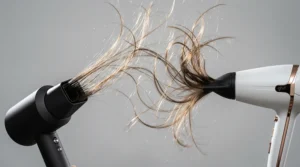
The theme across all three is simple. Match the motor to how often and how hard you dry, not to marketing buzzwords.
How an AC Motor vs DC Motor Hair Dryer Actually Works
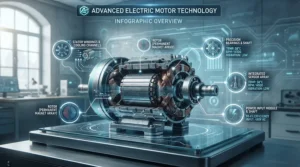
Let’s strip the jargon. A conventional AC or universal motor spins from household current, using copper windings and, in some designs, carbon brushes. It’s powerful but bulky. A brushed DC motor uses a commutator and brushes to deliver current, so those brushes wear out. A brushless DC (BLDC) motor replaces brushes with magnets and electronic control, so there’s less friction and wear.
The industry is shifting. Motor maker Nidec explains that conventional dryers traditionally use AC universal motors, and swapping to brushless DC allows smaller, lighter dryers. Patent literature adds that brushless DC motors last longer than brushed ones and are easier to speed-control.
| Feature | AC motor | Brushed DC | Brushless DC |
|---|---|---|---|
| Weight | Heaviest | Lighter | Lightest |
| Typical lifespan claim | Long | Shortest | Long (electronics permitting) |
| Noise character | Deep, can be loud | Buzzy, varies | Higher pitch, often quieter |
| Best For | Heavy daily use | Budget buyers | Travel and heat-sensitive hair |
This table covers category tendencies, not guarantees. A well-built brushed DC dryer can outlast a cheap brushless one, and a poorly built AC dryer can disappoint. The real lesson is to judge each product on build quality, filter design and warranty, not just on the letters AC or DC.
Motor Lifespan: How Long Does Each Motor Really Last?
Motor lifespan is where AC and DC dryers diverge most, and the claims are messy. A professional beauty supplier says AC motors last longer, with typical lifespans of around 2,000 hours, versus 400–700 hours for DC. It also says brushless motors can exceed 10,000 hours. A B2B marketplace blog cites 2,000–10,000+ hours for AC and 800–1,500 for DC. Sources disagree, so treat every number as an estimate.
Here’s how to make those hours real. Dry for 15 minutes a day and you’ll log about 91 hours a year. At 400–700 hours, a brushed DC dryer lasts roughly 4.4–7.7 years. At 2,000 hours, an AC dryer stretches past two decades, which means the cord, switch or electronics will probably fail first.
The practical conclusion is that for home users, lifespan differences matter less than they seem. For stylists drying eight hours a day, they matter enormously. Keep the filter clean, store the dryer dry and check warranty terms. Remember that marketplace sellers may not guarantee parts or repairs, which can shorten a dryer’s practical life even if the motor is fine.
Noise Level: Why the Decibel Number Isn’t the Whole Story
Noise level is where marketing gets slippery. Some sources say DC dryers run quieter, while others argue AC motors are quieter in salon-style builds. Both can be true, because noise depends on pitch, airflow and housing as much as motor type.
Consider the evidence. The Dreame Hair Gleam lists 59 dB operation. Dyson’s spec sheet gives 77 dB(A) sound power for the Supersonic and says its motor is tuned to a single, inaudible frequency. Sound power and sound pressure at your ear are different measurements, so those numbers aren’t directly comparable. The Twin Turbo 3900 adds a built-in silencer to tame its AC motor.
Here’s my practical rule. Brushless dryers tend toward a higher-pitched whine that many people find less intrusive. AC dryers tend toward a deeper roar. If you’re sharing a wall with a sleeping baby or roommate, favour brushless or a silenced AC model. If noise doesn’t bother you, don’t pay extra for it.
Drying Speed: Airflow, Wattage and the RPM Myth
Drying speed doesn’t come from rpm alone. It comes from airflow, heat and how well the airstream is focused. A 110,000 rpm motor sounds impressive, but a dryer with weak airflow still drags.
Compare the data carefully. Dyson lists a dry rate of 5.7 g/min and 13 L/s primary airflow, amplified ×3. The Twin Turbo 3900 quotes about 83 m³/h, roughly 23 L/s. Those aren’t like-for-like figures, because Dyson’s number is primary airflow before amplification, so don’t pit them head to head.
Imagine your towel-dried hair holds about 100 g of water, purely as an illustration. At 5.7 g/min, that’s roughly 17.5 minutes of drying. Your real number depends on hair thickness, towel technique and technique with the nozzle.
The takeaway is that AC dryers win with sheer volume and wattage, while brushless dryers win with focused, lower-heat airflow. Use a concentrator, work in sections and finish with the cool shot. Those habits matter more than any spec.
High-Speed Hair Dryer vs Standard Hair Dryer: What You Gain and Lose
The high-speed hair dryer vs standard hair dryer debate is really a debate between brushless DC and conventional AC or brushed DC.
| Feature | High-speed brushless | Standard AC/DC |
|---|---|---|
| Weight | Lighter (about 270–800 g in this list) | Often heavier |
| Heat approach | Lower, regulated heat | Higher wattage, often hotter |
| Repair and parts | Can be limited, especially via marketplaces | Simpler, widely serviced |
| Best For | Dyson Supersonic, Revlon PowerMove | Portofino, Twin Turbo 3900 |
High-speed dryers shine for fine, curly or colour-treated hair, because regulated heat is gentler. Standard dryers still win on durability claims and on raw wattage for thick hair. If you want a premium high-velocity alternative below Dyson pricing, look at the Shark HyperAIR. Canadian listings run roughly C$180–C$250, and Canadian Tire says it measures outlet heat over 1,000 times per second. I haven’t compared it against the others side by side, so treat it as a runner-up worth watching.
The analysis is simple. Pay for high-speed technology if you value weight, heat control and noise. Skip it if you want rugged durability on a budget.
Best AC Motor Hair Dryer Canada: Who Should Buy One
If you’re hunting for the best AC motor hair dryer Canada has to offer, three picks lead the pack. The BaBylissPRO Nano Titanium Portofino is the safe, well-rounded option with a removable filter and long cord. The Turbo Power Twin Turbo 3900 is the heavy-duty choice for stylists and daily users. The Bombay Hair Dryer is the budget-friendlier route with a Canadian seller.
Who should buy AC? People with thick, long or coarse hair, anyone drying daily and anyone who values a long-run durability case over a feather-light feel. Who should skip it? Travellers, anyone with wrist pain and shoppers who prioritize quiet over power.
One more consideration is voltage. Canadian homes run 120 V/60 Hz, so any dryer sold for this market plugs right in. The Bombay Hair Dryer is limited to North America, so leave it at home if you’re flying overseas.
Best DC Motor Hair Dryer Canada: Who Should Buy One
The best DC motor hair dryer Canada shoppers can buy depends on how you define “DC.” If you mean lightweight brushed DC, the BaBylissPRO Nano Titanium Lightweight is the standout. If you mean brushless DC, then the Revlon PowerMove, Dreame Hair Gleam and Dyson Supersonic form a ladder from budget to premium.
Who should buy DC? Fine or damage-prone hair, noise-sensitive households, travellers and anyone who finds heavy dryers tiring. Who should skip it? Daily salon users and anyone dependent on long-lived, repairable hardware.
The honest caveat is that brushless dryers rely on electronics, and when those fail, repairs aren’t always simple. Buy from sellers with clear return windows, and register warranties as soon as you unbox.
How to Choose Between an AC Motor vs DC Motor Hair Dryer
- Match motor to hair type. Thick, coarse hair benefits from AC power. Fine, curly or treated hair usually does better with controlled, lower heat.
- Count your weekly drying hours. Daily or professional use favours AC. Occasional use makes lifespan differences less important.
- Weigh weight and comfort. If your arm tires quickly, brushless DC’s lighter bodies are worth real money.
- Check the filter. A removable, easy-to-clean filter protects any motor.
- Read the warranty. Confirm Canadian terms, since US listings may differ.
- Verify safety features. Look for an ALCI or GFCI-style plug and recognized certification marks.
- Set a budget ceiling. Decide your price range first, so premium marketing doesn’t decide for you.
Safety in Canada: ALCI Plugs, Recalls and Smart Buying
Hair dryers and water are a bad mix, which is why immersion protection matters. Health Canada has recalled dryers that claimed UL 859 conformity but lacked an immersion protection plug. In that recall, the shock risk applied in homes without ground fault circuit interrupters if the dryer was immersed. The Canada Consumer Product Safety Act prohibits selling or even giving away recalled products.
Practical steps follow. Buy dryers with ALCI-style plugs and test them per the manual. Be cautious with unfamiliar third-party marketplace sellers, especially for unusual brands. If you must dry in the bathroom, install ground fault protection. Never use a dryer that has fallen into water, even if it looks fine.
Check the Health Canada recalls database before you buy an unfamiliar brand. It takes two minutes and could prevent a serious injury.

FAQ
❓ Is a brushless motor the same as a DC motor in a hair dryer?
❓ Can I use a hair dryer from the US in Canada?
❓ Do AC motor hair dryers weigh more than DC ones?
❓ How often should I replace my hair dryer?
❓ Are high-speed hair dryers worth the extra money?
Conclusion
So, who wins the AC motor vs DC motor hair dryer showdown? Nobody, and everybody. AC dryers win on raw durability claims and wattage for thick hair. Brushless DC dryers win on weight, regulated heat and often noise. Brushed DC dryers sit in the middle, offering strong airflow in a lighter body with a less certain long-run story.
Here’s the quick decision rule. If you dry daily or professionally, start with the Turbo Power Twin Turbo 3900 or the BaBylissPRO Nano Titanium Portofino. If you want a balanced everyday dryer, the BaBylissPRO Nano Titanium Lightweight is hard to beat. If you travel or want modern tech on a budget, the Revlon PowerMove is the smart entry. Curious about a cheaper brushless experiment? The Dreame Hair Gleam is worth a careful look. And if heat control and weight matter most, the Dyson Supersonic remains the benchmark.
Whatever you choose, remember that care beats specs. Clean the filter, test the plug, and let the dryer cool. Do those three things and any of these motors will serve you longer.
Recommended for You
- Professional Infrared Hair Dryer: 7 Best Picks (2026 Guide)
- Gentle Infrared Hair Dryer For Sensitive Scalp: 7 Safest Picks 2026
- Infrared Hair Dryer Vs Ceramic Hair Dryer: 7 Smart Buys 2026
Disclaimer: This article contains affiliate links. As an Amazon Associate, I earn from qualifying purchases. If you purchase products through these links, we may earn a small commission at no additional cost to you.
✨ Found this helpful? Share it with your friends! 💬🤗
