
In This Article
A tourmaline hair dryer vs ceramic hair dryer comparison boils down to what sits behind the grille. Ceramic elements spread heat evenly and avoid scorching hot spots. Tourmaline is a crushed mineral, usually blended into the ceramic, that is credited with far-infrared heat and static-taming negative ions. Most dryers today combine both.

Here’s the awkward truth the packaging glosses over: tourmaline and ceramic aren’t rivals. They’re ingredients. Ceramic is the heat-spreading base, and tourmaline is a boron-silicate mineral ground into powder and baked into or coated onto that base. So the real question isn’t “which team?” It’s whether the extra mineral claim is worth paying for, and what else comes in the box.
Before the mineral talk, a reality check from the lab. A Korean study published through PubMed Central dried hair strands at 15 cm, 10 cm and 5 cm. The hair reached roughly 47°C, 61°C and 95°C, and surface damage climbed with the heat. Held 15 cm away and kept moving, the dryer did less overall harm than letting hair air-dry. Technique, in other words, can outweigh technology.
This guide sorts seven real dryers sold to Canadian shoppers, from a budget kit to a sensor-packed splurge. Then it digs into ion output, shine, professional use, and the 120 V safety details most blog posts skip. Everything below is spec-and-source analysis, not hands-on testing. Where review data was thin, I say so.
Quick Comparison: Tourmaline Hair Dryer vs Ceramic Hair Dryer at a Glance
Think of this table as the cheat sheet. It strips the debate down to what changes in your bathroom, not on the box.
| Factor | Ceramic-only (ceramic + ionic) | Tourmaline-ceramic combo |
|---|---|---|
| How it heats | Ceramic element or coating spreads heat evenly, with fewer hot spots | Same ceramic base, plus tourmaline credited with far-infrared heat |
| Frizz and static | Relies on an ionic generator, if the model has one | Ion claims come from the mineral coating and any generator |
| Typical price band | Wide, from budget to salon-grade | Mostly budget to mid-range |
| Strength of evidence | Even heat is well understood | Tourmaline effects are claimed more often than measured |
| Examples | Parlux 385 Power Light | Remington Damage Protection D3190, KISS 1875 Watt Pro Tourmaline Ceramic |
| Best For | Stylists who want low weight and a pro build | Home users chasing frizz control on a budget |
Looking at the table, the practical gap is small. Ceramic gives you the even heat, and tourmaline is mostly an add-on claim. If you want the most proven benefit per dollar, prioritize airflow, heat control and weight over mineral labels. Treat tourmaline as a cheap bonus, not a deciding factor.
💬 Just one click — help others make better buying decisions too!😊
Top 7 Tourmaline and Ceramic Hair Dryers for Canadian Buyers: Expert Analysis
Price bands below are approximate, built from typical North American retail listings during research, and marketplace pricing swings. Check current price on Amazon.ca before you commit.
1. Remington Damage Protection D3190 — budget combo with a triple-tech grille
Remington coats the grille in ceramic, ionic and tourmaline elements, which is a lot of marketing for a drugstore-level spend. The 1875 W motor matters because that is effectively the ceiling for a 120 V household plug (125 V × 15 A), so you aren’t giving up raw power versus pricier plug-in dryers. Three heat settings, two speeds, a cool shot, a removable filter, a concentrator and a diffuser round out the kit. That filter is the unsung hero: lint-choked intakes make dryers run hot and die early.
Based on the spec sheet, this suits someone leaving a bare-bones dryer who wants frizz control without a big outlay. It probably won’t feel as light as DC-motor rivals. Remington’s own US site lists the model as discontinued, so confirm the current variant and warranty on Amazon.ca. Reviewer sentiment I could verify is thin: a retailer summary says buyers like the multiple heat and speed options, but I couldn’t confirm a large Amazon.ca sample.
Pros:
- ✅ Ceramic, ionic and tourmaline grille at entry-level cost
- ✅ Removable filter simplifies upkeep
- ✅ Concentrator and diffuser included
Cons:
- ❌ Discontinued on maker’s US site; stock varies
- ❌ Only two speed settings limits fine control
Price check: around C$30-C$50; solid value if the listing is current.
2. Revlon 1875W Infrared Heat Ceramic — infrared and tourmaline ionic in one
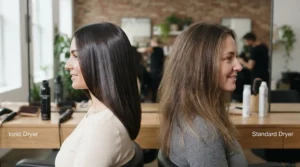
This one stacks three claims: infrared heat, a triple ceramic coating and tourmaline ionic technology. In practice that makes it a hybrid by listing, which is exactly why it sits in the middle of the tourmaline vs ceramic debate. With three heat settings, two speeds, a concentrator and a diffuser, it covers straight blowouts and wavy air-drying with one kit.
The analytical take: it’s a strong all-rounder for curl-leaning households because the diffuser softens airflow so waves aren’t blasted apart. Don’t expect the “infrared dries from the inside out” line to be a miracle. It’s a heat-distribution claim, and independent proof is limited. Reviewers on a US retailer’s listing often describe quick drying and smooth results, including on curly hair. A TODAY.com writer’s trial also praised its speed and shine. Both are single-source impressions rather than a controlled comparison.
Pros:
- ✅ Diffuser suits waves and curls
- ✅ Three heat settings cover most hair types
- ✅ Hybrid ceramic, infrared and tourmaline coating
Cons:
- ❌ Infrared benefits are claimed, not independently measured
- ❌ Plastic-heavy build feels budget-grade
Price check: roughly C$35-C$60; good value for a feature-rich kit.
3. Andis Pro Dry 80750 — soft-grip tourmaline ceramic with built-in shock protection
The standout is the grip-and-safety combo. The 1875 W AC motor runs on 125 V/60 Hz, and listings mention Lifeline shock protection, the kind of leakage-protection plug that matters near sinks. AC motors usually weigh more than DC ones but are generally favoured for long service life. Expect two speeds, three heat settings, a cool shot and a removable filter cap, with nano ceramic and ionic tourmaline on the label.
Here’s what to weigh: published weights vary between roughly 0.8 and 1 kg (1.8-2.2 lb), depending on whether packaging or attachments are counted. That’s noticeable for long blowouts. Some listings include a diffuser and others don’t, so verify on Amazon.ca. Andis also lists a customer-support line for the USA and Canada. I could verify only a sliver of reviews, mostly from a marketplace buyer who liked the gentler low speed, so treat satisfaction as unproven.
Pros:
- ✅ AC motor suits frequent daily use
- ✅ Shock-protection plug adds bathroom safety
- ✅ Soft-grip handle with a removable filter cap
Cons:
- ❌ Heavier than DC-motor competitors
- ❌ Diffuser inclusion differs by listing
Price check: around C$40-C$80; fair value for durability-minded buyers.
4. BaBylissPRO TT Tourmaline and Ceramic — lightweight DC motor with pro-style polish
BaBylissPRO pairs tourmaline and ceramic with a 1875 W DC motor, two speeds, three heat settings and a cool shot. Best Buy Canada lists it under model BTM5559C, with a large finger diffuser, a snap-on concentrator and a removable filter. DC motors spin up fast and keep the body light, which matters when your arm is aloft for ten minutes.
Spec-wise, it reads like a bridge between drugstore kits and salon gear. The trade-off is that DC motors generally wear faster than AC under all-day salon duty, so it’s a home-and-light-pro choice. A Canadian shopping roundup describes reviewer sentiment as broadly positive, though I couldn’t confirm product-level review counts on Amazon.ca. Model codes also vary by retailer, so match the listing carefully.
Pros:
- ✅ Light DC motor reduces arm fatigue
- ✅ Large finger diffuser defines curls
- ✅ Snap-on concentrator for smoother blowouts
Cons:
- ❌ DC motor may wear faster under heavy use
- ❌ Model codes differ across retailers
Price check: around C$100-C$170; worthwhile if weight and attachments matter.
5. KISS 1875 Watt Pro Tourmaline Ceramic — the cheapest full kit
KISS delivers a tourmaline ceramic dryer with a DC motor and a five-piece bundle: two straightening piks, a concentrator, a diffuser and a removable filter cap. A hanging loop makes storage easy. For first-time buyers, the piks are a clever extra, since they let you detangle and straighten as you dry without juggling a brush.
My read: it’s the entry ticket to tourmaline-ceramic without financial regret. On a major US retailer’s listing, the set carries roughly 4.5 stars across thousands of ratings. A recurring caveat is that heat levels can feel inconsistent, which is typical when ultra-budget dryers use simpler thermostats. Amazon.ca reviews weren’t verified, so check them before buying.
Pros:
- ✅ Five-piece kit at an entry-level cost
- ✅ DC motor keeps weight manageable
- ✅ Hanging loop and removable filter cap
Cons:
- ❌ Reviewers note inconsistent heat levels
- ❌ Budget build may not last for years
Price check: roughly C$25-C$45; strong value for casual use.

6. Parlux 385 Power Light — featherweight ceramic-and-ionic salon classic
Parlux proves ceramic doesn’t need tourmaline to earn respect. Retail listings quote about 450-480 g (roughly 1 lb), a built-in silencer, four heat settings, two speeds, a cold shot and two nozzles. A cord around 2.75-3 m is a luxury if your outlet sits across the bathroom.
Here’s what the spec sheet won’t tell you, but pro-oriented listings imply: low weight plus a long cord is what stylists actually pay for. Retailer copy cites repeated InStyle awards, but that’s marketing copy, not independent verification. The 2150 W rating on many listings reflects European voltage, so confirm you’re buying a 120 V North American version. I found no verified Amazon.ca review pool, so claims here rest on specs.
Pros:
- ✅ About 450-480 g reduces arm strain
- ✅ Long cord gives freedom of movement
- ✅ Four heat settings allow fine control
Cons:
- ❌ Voltage versions differ by market
- ❌ No tourmaline element, if that’s your priority
Price check: roughly C$250-C$400; worth it only for frequent or professional use.
7. Dyson Supersonic Nural — sensor-driven heat control instead of minerals
Dyson skips the tourmaline debate and manages heat with sensors. A time-of-flight sensor measures distance and lowers temperature as the dryer nears your scalp, targeting 55°C in Scalp protect mode, according to Dyson. Five magnetic attachments, Pause detect and Attachment learning round out the feature list. Dyson’s “no heat damage” language is a brand claim, so treat it as that.
The analysis: this is the logical answer to the lab study above. Controlling temperature near the scalp matters more than mineral coatings. It’s also the priciest option by a wide margin, as a 2026 roundup flagged. I couldn’t verify a large Canadian review sample, and Dyson’s survey percentages aren’t customer reviews. Buy it for heat management and build, not for tourmaline.
Pros:
- ✅ Distance sensor automatically lowers heat near scalp
- ✅ Five magnetic attachments for varied hair types
- ✅ Pause detect reduces airflow when set down
Cons:
- ❌ Highest price in this roundup by far
- ❌ Brand claims outpace independent evidence
Price check: roughly C$550-C$750; justified only if heat control is your priority.
Top 7 Side by Side
| Product | Technology | Power | Approx. price (CAD) | Best For |
|---|---|---|---|---|
| Remington Damage Protection D3190 | Ceramic + ionic + tourmaline | 1875 W | C$30-C$50 | Budget frizz control |
| Revlon 1875W Infrared Heat Ceramic | Infrared + ceramic + tourmaline ionic | 1875 W | C$35-C$60 | Curls and diffuser fans |
| Andis Pro Dry 80750 | Nano ceramic + ionic tourmaline, AC motor | 1875 W | C$40-C$80 | Heavy daily use |
| BaBylissPRO TT Tourmaline and Ceramic | Tourmaline + ceramic, DC motor | 1875 W | C$100-C$170 | Light pro-style blowouts |
| KISS 1875 Watt Pro Tourmaline Ceramic | Tourmaline ceramic, DC motor | 1875 W | C$25-C$45 | Lowest-cost full kit |
| Parlux 385 Power Light | Ceramic + ionic | 2150 W (verify 120 V version) | C$250-C$400 | Stylists wanting low weight |
| Dyson Supersonic Nural | Sensor-controlled heat | Not wattage-led | C$550-C$750 | Splurge on heat control |
The table shows a clear pattern: 1875 W is the standard at nearly every price point, so power alone won’t separate these dryers. Money buys weight, motor longevity and heat control rather than “more tourmaline.” If you only care about frizz and a tight budget, KISS 1875 or Remington D3190 do the job. If your arm hurts mid-blowout, Parlux 385 or BaBylissPRO TT earn their premium.
Hybrid Technology: Why the Tourmaline-Ceramic Combo Became the Default
Hybrid technology is simply marketing’s word for stacking claims: ceramic for even heat, tourmaline for ions and far-infrared, and sometimes an ion generator or infrared label on top. It dominates because it’s cheap to build. According to one manufacturer explainer, tourmaline ceramic is made by mixing tourmaline powder into clay and firing it, so adding the mineral costs little. That’s why KISS 1875 and Remington D3190 can carry tourmaline labels at drugstore prices.
Does the stack work? Even heat is a genuine benefit: it reduces hot spots that could over-dry a section. The additional claims are weaker. Revlon Infrared bundles infrared heat, ceramic and tourmaline ionic in one listing, yet the infrared benefit remains manufacturer-described. Meanwhile Parlux 385 shows that a ceramic-and-ionic design can be fully respected without a tourmaline label.
Here’s how hybrids compare to older designs:
| Dryer type | Heat quality | Frizz control | Best For |
|---|---|---|---|
| Basic metal-coil dryer | Hotter spots, less even | Minimal | Occasional, short-hair use |
| Ceramic-only or ceramic + ionic (Parlux 385) | Even heat | Moderate, ionic-dependent | Stylists, frequent use |
| Tourmaline-ceramic combo (Remington D3190, BaBylissPRO TT) | Even heat plus mineral claims | Moderate to good | Home frizz control |
| Sensor-led (Dyson Nural) | Actively regulated | Strong, heat-managed | Heat-sensitive hair, high budgets |
The takeaway: a hybrid is a safe default, not a revolution. Buy it for even heat and a fair price, then judge extras like motor type and weight. If someone claims tourmaline alone transforms your hair, that’s marketing talking.
Negative Ion Output: What It Does (and What Nobody Can Promise)
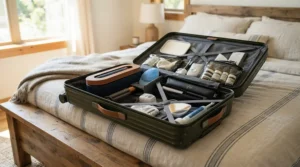
Negative ion output is the headline number you’ll never actually see on most packaging. Few listings I came across publish a measurable ion figure, which means “ionic” is more often a label than a spec. The logic behind it is sound at a basic level: dry winter air and friction leave hair carrying static charge, and ions can neutralize that charge so strands stop repelling each other. That’s the frizz story.
The question is where the ions come from. Some dryers use an active generator. Others, like the Remington D3190, lean on a coating on the grille. Tourmaline is pyroelectric, meaning it generates charge when heated, but how much comes out of a thin coating is unclear. A 2005 materials-science paper modelled the crystal and concluded that its pyroelectric and far-infrared effects can be explained in theory but should be small. It also said measurements are needed to explain industrial use of tourmaline powder.
Practical Canadian takeaway: in January, indoor heating makes static worse, so a dryer with ion features is a reasonable bet. Still, a cool shot and a leave-in conditioner often do more for flyaways than a coating. Treat ion claims as a small bonus and avoid paying a premium just for the words.
Shine Enhancement: How a Dryer Can (and Can’t) Help Hair Look Glossier
Shine is basically light bouncing off smooth cuticle scales lying flat. A dryer can’t add shine, but it can avoid ruining it. When heat drives water out unevenly, cuticles can lift, and the PubMed Central study above found that higher temperatures caused more surface damage. That’s the shine killer, and no tourmaline coating cancels it out.
Here’s what actually helps:
- Distance and motion. The study’s 15 cm, constant-motion setup produced the gentlest results.
- Nozzle direction. Point the concentrator down the hair shaft, from roots to ends, so scales lie flat.
- Cool shot. Finish sections with cool air to set the style, which is why every kit here includes the button.
- Even heat. Ceramic bases reduce hot spots that can roughen a section.
Where does the shine enhancement claim land? It’s partially real. Even heat and lower temperatures protect smoothness, and static control reduces flyaways that read as dullness. But shine from the dryer itself is modest. Dyson Nural attacks the problem by limiting heat near the scalp, while Revlon Infrared and BaBylissPRO TT rely on coating claims. If glossy hair is your goal, spend time on technique first, and the dryer second.
How to Choose Between a Tourmaline Hair Dryer and a Ceramic Hair Dryer
The short answer: choose the dryer with the best weight, heat control and airflow for your hair, then treat tourmaline as a bonus. Here are six steps:
- Start with hair type. Fine or colour-treated hair benefits from lower, steadier heat, while thick hair needs stronger airflow.
- Check wattage against your outlet. A 120 V plug tops out near 1875 W, so a bigger number usually signals a different voltage.
- Pick a motor. AC motors suit heavy use, while DC motors are lighter for home users.
- Count the settings. Three heat levels, two speeds and a cool shot give you real control.
- Match attachments to your style. A concentrator suits straight blowouts, and a diffuser suits curls and waves.
- Verify safety. Look for a leakage-protection plug and a recognised certification mark.
Apply these and the decision usually narrows fast. Remington D3190 and KISS 1875 win steps 1-4 on a budget, while Andis 80750 wins step 3 and step 6.
Tourmaline Hair Dryer for Professional Use Best: What Stylists Should Weigh
For a tourmaline hair dryer for professional use best-in-class decision, ignore the mineral first and check four things: motor life, weight, cord length and noise. A stylist may dry for hours, so a dryer that’s 400 g lighter changes the workday more than any coating.
On paper, Andis 80750 appeals through its AC motor and Lifeline shock protection, while its heavier body is the trade-off. BaBylissPRO TT gives a lighter DC motor and a bigger diffuser, which suits curl-focused clients, though DC motors may wear sooner in a busy chair. Parlux 385 wins on weight and cord length, but it’s ceramic-and-ionic, not tourmaline. If a client or salon policy demands tourmaline specifically, the first two are the better fit.
A fair caveat: this is spec analysis, not a salon duty-cycle test. Before buying, check the warranty terms for commercial use, since many consumer warranties exclude salon environments. If you work from a home studio, a mid-range Andis 80750 or BaBylissPRO TT is a sensible starting point. Move to Parlux 385 if wrist and shoulder strain is already a problem.
Tourmaline Ceramic Combo Hair Dryer Review Canada: Voltage, Safety and Availability
Any tourmaline ceramic combo hair dryer review Canada shoppers read should start with electricity. Canadian outlets run 120 V, which is why many dryers cluster at 1875 W. Imported European models often quote 2150 W or more, so confirm the North American version before ordering.
Next is safety. Canada’s standards body lists CSA C22.2 No. 60335-2-23, which covers household appliances for skin or hair care, including hair dryers and straighteners. Look for a recognised certification mark and a leakage-protection plug. Andis 80750 advertises shock protection, and the mention matters near sinks and tubs.
Availability deserves a quick note too. Some Marketplace listings carry fine print about replacement parts and repairs, including for Quebec buyers, so check seller policies. Also confirm that the listing you buy matches the model you researched, since model codes differ across retailers, as with BaBylissPRO TT‘s code. Finally, check the warranty region: a US-only warranty may not help in Canada. Look for Canadian support options, such as Andis’s USA and Canada phone line.

Features That Actually Matter (and Those That Don’t)
Marketing crams dryer boxes with badges, so here’s a filter.
Features that matter:
- Weight, because arm fatigue ends blow-dries early.
- Heat and speed range, since three heats and two speeds are enough for most hair.
- A cool shot button for setting style.
- A removable filter, which protects the motor and heat output.
- The right attachments for your style.
Features that don’t (much):
- “3x protection” slogans like Remington D3190‘s, which compare against the brand’s own standard dryers, not independent benchmarks.
- Piece count. KISS 1875‘s five-piece bundle looks generous, but you may never use the piks.
- Infrared and tourmaline labels as standalone reasons to pay more.
The sensor features on Dyson Nural are different. Distance-based heat control tackles the temperature issue the research highlighted, though you pay heavily for it. For everyone else, a good filter, steady heat and low weight beat a long badge list. Judge the dryer by how it feels in your hand and how well the heat behaves, not by the number of technologies printed on the box.
Long-Term Cost & Maintenance
Cheap dryers feel like bargains until you replace them. This table uses assumed lifespans purely for illustrative arithmetic, not measured durability.
| Scenario | Upfront (approx.) | Assumed lifespan | Cost per year | Best For |
|---|---|---|---|---|
| Budget combo (KISS 1875) | C$35 | 2 years | About C$18 | Occasional users |
| Mid-range (Andis 80750) | C$60 | 4 years | About C$15 | Daily home use |
| Premium (Dyson Nural) | C$650 | 6 years | About C$108 | Heat-sensitive hair |
The arithmetic shows why the mid-range often wins: a sturdier motor can beat a cheap dryer on cost per year. Premium pricing only pays off if sensor-based heat management matters to you. Your lifespan assumptions will vary, so adjust the numbers to your habits.
Maintenance extends all of them. Clean the removable filter every few weeks, since lint forces the motor to work harder. Avoid wrapping the cord tightly around the body, which strains the wiring. Unplug after use, and never leave a dryer near water. A little upkeep can stretch a C$40 dryer further than most people expect.
Practical Usage Guide: Your First 30 Days with a Tourmaline Ceramic Dryer
New dryer, new habits. Here’s a first-month plan that turns the research into routine.
Week 1: Set up and learn the settings. Check the plug, clean the filter and find the cool shot. Towel-blot hair, then rough-dry on low heat and medium speed.
Week 2: Fix your distance. Hold the dryer about 15 cm from your hair and keep it moving, mirroring the study’s gentlest setup. Use the concentrator for straight styles and the diffuser for waves, such as on Revlon Infrared or BaBylissPRO TT.
Week 3: Section and finish. Divide hair into sections, dry roots first and finish each with a cool shot. Point the nozzle down the strands to lay the cuticle flat.
Week 4: Maintain. Rinse and dry the filter, check the cord for kinks and note which heat setting you actually use.
Common first-30-day mistakes:
- Holding the dryer too close, which spikes surface temperature.
- Blasting damp hair on the hottest setting instead of rough-drying first.
- Forgetting the filter until the dryer starts overheating.
Follow this routine and even a C$40 dryer like KISS 1875 can behave better than an expensive one used badly.
Real-World Scenarios: Which Dryer Fits Which Life
Here are three profiles matched to the research, with budget, setting and frequency spelled out.
The student in a small Montréal apartment. Budget: about C$40. Use: three to four times a week. Counter space is tight and static spikes in winter. KISS 1875 gives a full kit and a hanging loop for cramped storage, while Remington D3190 is the alternative if a ceramic, ionic and tourmaline grille appeals and stock is available.
The curly-haired Vancouver commuter. Budget: C$60-C$150. Use: daily, damp climate. A diffuser is non-negotiable. Revlon Infrared covers curls at a modest price, and BaBylissPRO TT adds a large finger diffuser and a lighter DC motor if you’ll pay more.
The home-studio stylist in Toronto. Budget: C$100-C$400. Use: several clients a day. Weight and motor life drive the decision. Parlux 385 minimizes strain with its low weight and long cord, while Andis 80750 offers an AC motor at a friendlier price.
For fine or colour-treated hair with money to spend, Dyson Nural‘s heat control is the logical splurge. The point: match the dryer to your life, not the longest feature list.
Problem → Solution Guide
Problem: winter static and flyaways. Solution: choose a dryer with ion features such as Revlon Infrared or Remington D3190, finish with the cool shot and use a leave-in conditioner. Ions help, but moisture does the heavy lifting.
Problem: the dryer overheats or shuts off. Solution: pull and clean the removable filter. Clogged intakes are a common cause, which is why Andis 80750 and KISS 1875 both feature removable filter caps.
Problem: hair feels dry after styling. Solution: lower the heat, move the dryer back to 15 cm and keep it in motion, following the research.
Problem: arm fatigue. Solution: switch to a lighter body such as Parlux 385 or BaBylissPRO TT.
Problem: safety near water. Solution: pick a dryer with a leakage-protection plug. Health Canada has recalled a hair dryer that lacked an appliance leakage current interrupter, noting a shock risk if it falls into water in homes without ground fault protection. Never use any dryer where it could fall into a sink or tub.

FAQ
❓ Is a tourmaline dryer better than ceramic for frizz?
❓ Which tourmaline ceramic combo dryer suits a tight budget in Canada?
❓ Can I use a European 2150 W salon dryer in Canada?
❓ How often should I clean my dryer's filter?
❓ Are expensive dryers worth it for fine or coloured hair?
Conclusion
So, which wins the tourmaline hair dryer vs ceramic hair dryer fight? Honestly, neither, because they’re partners. Ceramic delivers the even heat that protects your hair, and tourmaline is a modest add-on credited with ions and far-infrared warmth. The evidence for the extras is thinner than the packaging implies.
Here’s how to shop with that in mind. For the lowest outlay, KISS 1875 Watt Pro Tourmaline Ceramic or Remington Damage Protection D3190 give you the label for little money. For curls, Revlon 1875W Infrared Heat Ceramic and BaBylissPRO TT Tourmaline and Ceramic bring the diffusers. For frequent use, Andis Pro Dry 80750 brings an AC motor, and Parlux 385 Power Light brings low weight. And if heat control is your priority, Dyson Supersonic Nural is the sensor-driven splurge.
Whatever you pick, hold it about 15 cm away, keep it moving, clean the filter and check the plug. Those habits protect your hair more than any mineral coating.
✨ Ready to Find Your Match?
🔍 Take your next blow-dry from frizzy to flawless with these carefully selected dryers. Click on any highlighted item to check current pricing and availability, and compare the details that matter to you. The right dryer can help you create smooth, glossy results you’ll love!
Recommended for You
- Professional Ceramic Hair Dryer: 7 Best Proven Picks (2026)
- Ceramic Hair Dryer For Damaged Hair: 7 Best Gentle Picks 2026
- Travel-Size Ionic Hair Dryer: 7 Best Picks For Canada In 2026
Disclaimer: This article contains affiliate links. As an Amazon Associate, I earn from qualifying purchases. If you purchase products through these links, we may earn a small commission at no additional cost to you.
✨ Found this helpful? Share it with your friends! 💬🤗
