In This Article
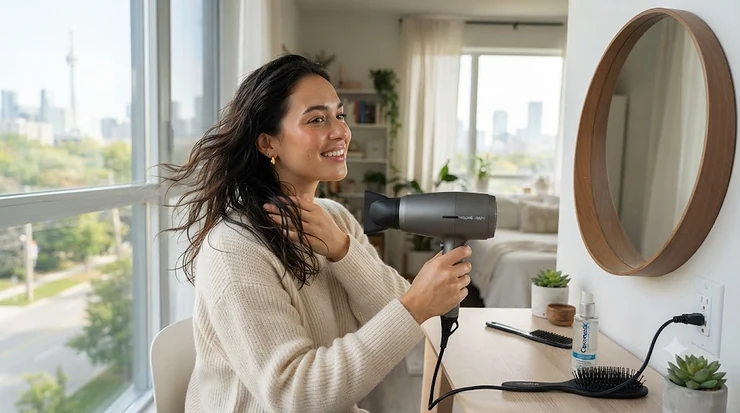
Somewhere between the ten-dollar drugstore dryer that sounds like a leaf blower and the six-hundred-dollar salon tool your hairstylist won’t shut up about, there’s a sweet spot. That’s where a mid range hair dryer lives — usually in the C$100 to C$150 zone — and it’s frankly where most Canadians should be shopping. You’re not paying for a titanium-plated logo or a smartphone app that tracks your blowout streak. You’re paying for a motor that won’t quit after eight months, ionic technology that actually does something measurable to frizz, and attachments that fit properly instead of rattling loose mid-styling.
This guide walks through seven real, currently available models that sit in or near that middle tier, why each one earns its spot, and where the genuine trade-offs are — because every dryer has them, no matter what the box says. We’ll also cover how to choose a mid-range hair dryer without getting seduced by marketing buzzwords, what quality affordable blow dryer options actually deliver versus what they merely promise, and where your money stops buying meaningful performance gains. Along the way, we’ll dig into a hair dryer $100 to $150 shortlist, talk about what middle-tier pricing gets you compared to the extremes, and be upfront about where a moderate investment styling routine hits diminishing returns.
One quick definition before we dive in, since it matters for how you shop: a mid-range hair dryer is a hand-held blow dryer typically priced between roughly C$100 and C$150, built with an AC or digital brushless motor (1,600 to 2,000 watts), ionic or ceramic technology, and multiple heat/speed settings — positioned above entry-level drugstore models and below premium salon-grade or app-connected units.
Before you buy anything that plugs into a Canadian wall outlet, it’s worth knowing what “certified” actually means. According to Health Canada, electrical products that plug into an outlet must meet Canadian national safety standards and be certified by an accredited certification body, and shoppers should check for certification marks such as CSA, cUL, or cETL before purchasing. Keep that in mind as we go — it’ll come up again later.
Quick Comparison Table: Mid-Range Hair Dryers at a Glance
| Product | Motor / Wattage | Best For | Price Range (CAD) |
|---|---|---|---|
| Xtava Allure 2200W | AC, 2,200W | Power on a budget | Under C$100 |
| Revlon One-Step Volumizer Enhanced | AC, 1,100W | Dry-and-style in one tool | Around C$90–100 |
| Panasonic nanoe EH-NA65 | AC, 1,875W | Moisture-retention tech | C$100–140 |
| BaBylissPRO Nano Titanium Ionic & Ceramic | AC, 1,700–2,000W | Balanced everyday use | C$100–115 |
| Remington PROLUXE HydraCare | Digital, 1,875W | Coloured or damage-prone hair | C$110–140 |
| Conair InfinitiPRO Digital Dryer | Digital, up to 1,875W | Precision heat control | C$140–165 |
| Shark HyperAIR HD112 | Brushless, high-velocity | Auto-sensing premium pick | C$180–220 |
A quick read of that table tells its own story: the real mid-range hair dryer cluster — Panasonic, BaBylissPRO, and Remington — all sit within about C$40 of each other, and the differences between them come down to what kind of hair damage or drying frustration you’re solving, not raw power. The Xtava and Revlon undercut that band but still punch above their price. The Conair and Shark bracket the top, giving you a sense of what you’re skipping (or gaining) if you spend C$30 to C$70 more.
💬 Just one click — help others make better buying decisions too!😊
Top 7 Mid-Range Hair Dryers: Expert Analysis
1. Xtava Allure 2200W Professional Ionic Ceramic Hair Dryer — most airflow you’ll get under C$100
The standout here is straightforward: a 2,200-watt AC motor in a price bracket where most competitors top out around 1,875 watts. That extra headroom shows up as real drying speed, not marketing fluff.
Tourmaline ceramic construction and a built-in ion generator handle the technical side — the ceramic grille distributes heat more evenly than bare metal coils, which matters if you’ve ever gotten a hot spot on your scalp from a cheaper dryer. Two speed settings and three heat settings give you enough range for fine hair on low and coarse, dense hair on high, and the cool-shot button is a genuine cool-shot, not a lukewarm afterthought.
Here’s what most buyers overlook about a dryer in this power class: more wattage means faster drying, but it also means you need to keep the nozzle moving. Reviewers consistently report that thin or fine hair can feel over-blown at full power, which tracks with a motor built for thick, coarse textures rather than delicate strands. If your hair is fine or damaged, this isn’t the pick; if it’s dense, curly, or you’re just tired of standing in front of a mirror for twenty minutes, it is.
Aggregated review sentiment across retail platforms skews positive on drying speed and build quality, with a recurring complaint about the unit’s length and weight for smaller hands — it’s not a travel dryer, and nobody’s pretending it is.
Pros:
✅ 2,200W motor outperforms most units in its price class
✅ Tourmaline ceramic grille reduces hot spots
✅ Genuine cool-shot button locks in styles
Cons:
❌ Can feel too powerful for fine or thin hair
❌ Bulkier and heavier than compact alternatives
At around C$70–100, this sits at the budget edge of the mid-range hair dryer conversation, and the value verdict is simple: for raw drying power per dollar, it’s hard to beat.
2. Revlon One-Step Volumizer Enhanced — best for skipping the round brush entirely
The standout feature is right in the name: this is a hot air brush, not a traditional dryer, and it collapses two steps in your routine into one.
An 1,100-watt motor pushes heated air through an oval brush head studded with nylon and boar-style bristles, so you’re detangling, smoothing, and drying simultaneously. Ceramic coating on the barrel distributes heat evenly along its length, and ionic technology cuts down on the static and flyaways that a plain round brush would leave behind. Three heat settings and a cool-shot option round out the controls.
Based on the spec comparison with standalone dryers, the trade-off is obvious: 1,100 watts is modest, so this tool isn’t about raw speed — it’s about eliminating a second appliance from your counter and a second step from your morning. That makes it best suited to people with mid-length, fine-to-medium hair chasing smooth, voluminous blowouts, and less ideal for anyone with very thick or very curly hair, where reviewers note the brush struggles to fully detangle in a single pass.
Independently reported reviews are famously enthusiastic for this category of product, with thousands of aggregated ratings citing time saved on styling; the recurring criticism is that curly and coarse-textured users see less consistent results than straight or wavy-haired users, a pattern echoed across multiple retailer review sections.
Pros:
✅ Combines drying and styling into one step
✅ Ceramic-coated barrel smooths as it dries
✅ Genuinely reduces total morning routine time
Cons:
❌ Best suited to fine or medium hair, not thick or curly
❌ 1,100W motor is modest compared to standalone dryers
Typically priced in the C$85–100 range, it’s a slightly different category of tool than a “pure” dryer, and the value case rests entirely on how much you’d pay for one less appliance and one less step.
3. Panasonic nanoe EH-NA65-K — best moisture-science pick in the middle tier
The standout advantage is nanoe technology: a system that pulls moisture from the surrounding air and turns it into ultra-fine, negatively charged particles that get infused into each hair strand as you dry.
An 1,875-watt AC motor handles the airflow while the nanoe particles hold roughly 1,000 times more moisture than the ions produced by a standard ionic dryer, penetrating the hair shaft to help balance moisture and reduce damage from everyday brushing. In practice, that translates to noticeably less frizz on humid days and a softer finish than most ionic-only competitors in the same price bracket — the spec sheet won’t tell you this, but user reports across forums and retail sites repeatedly single out how “un-dry” hair feels afterward compared with a typical AC-motor dryer.
Here’s what’s worth weighing: two speed settings and three temperature settings (hot, warm, cool) is a narrower control range than some rivals offer, and the nanoe system does add a faint operating hum some users notice in a quiet bathroom. For anyone with colour-treated, chemically processed, or naturally dry hair, though, the moisture-retention angle is the single best reason to pick this model over a straight ionic competitor at a similar price.
Aggregated sentiment on Canadian deal forums and retail sites is strongly positive, particularly from users who switched from a premium salon dryer and found the difference in everyday feel smaller than the price gap suggested; a recurring critique is that Canadian retail pricing on this model fluctuates significantly around sale periods.
Pros:
✅ Nanoe moisture infusion reduces frizz and damage
✅ 1,875W motor keeps drying times reasonable
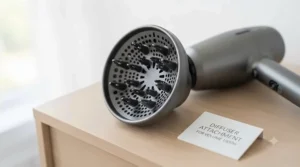
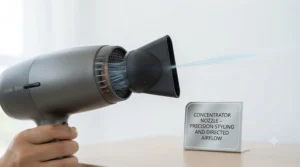
✅ Diffuser, concentrator, and quick-dry nozzle included
Cons:
❌ Only two speed settings versus three on some rivals
❌ Price fluctuates noticeably around Canadian sale periods
Generally found in the C$100–140 range depending on retailer promotions, this is a strong value verdict for dry, damaged, or colour-treated hair specifically — the moisture tech is solving a real problem, not just adding a checkbox feature.
4. BaBylissPRO Nano Titanium Ionic & Ceramic Hairdryer — the balanced performance benchmark
The standout here is genuine balance: nano titanium infused into the ceramic grille, a proper ion generator, and a motor rated between 1,700 and 2,000 watts depending on the exact model variant.
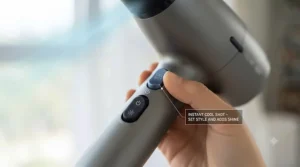
What most buyers overlook about titanium-infused ceramic is that it isn’t just marketing language — titanium conducts and releases heat faster and more evenly than plain ceramic, which shortens drying time without cranking the temperature dial higher. Two speeds and three heat settings, plus a cool-shot button, cover the standard bases, and BaBylissPRO backs the unit with a four-year limited warranty, longer than most competitors in this price tier offer.
On paper this means: fast, even drying with reduced hot-spot risk, in a genuinely lightweight 1.05-pound body designed to reduce hand fatigue during longer styling sessions. Reviewers consistently note the removable rear filter as an underrated feature — it’s a five-second clean that extends motor life meaningfully, something plenty of dryers make you dig around a screwdriver for.
The honest caveat: at the very top of its price range, this model edges close to what the Shark and premium Conair options cost, so shoppers on the tightest mid-range budget may find better value in the Panasonic or Xtava instead.
Pros:
✅ Nano titanium ceramic grille speeds even heat distribution
✅ Four-year limited warranty beats most in this price class
✅ Removable filter makes maintenance genuinely simple
Cons:
❌ Price creeps toward premium territory at the high end
❌ No digital display for precise temperature readout
Priced around C$100–115 direct from the manufacturer’s Canadian site, this is arguably the most “textbook mid-range” pick on this list — nothing flashy, everything functional.
5. Remington PROLUXE HydraCare — built for hair that’s already been through a lot
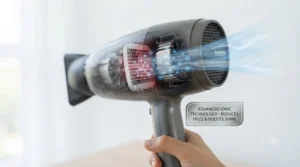
The standout feature is the HydraCare sensor, a system designed specifically to reduce heat exposure while you dry.
A digital motor delivers airspeeds up to 80 mph for notably fast drying, while the HydraCare sensor continuously monitors and regulates the temperature of the air actually reaching your hair — rather than just running hot until you release the trigger, as older AC-motor dryers tend to do. Moisture Lock Conditioning Technology adds a layer most competitors skip entirely: it releases micro-conditioners onto hair as you dry, aiming to preserve moisture balance rather than strip it.
Here’s what the spec sheet won’t tell you, but the design intent makes clear: this dryer is aimed squarely at people who colour, bleach, or chemically treat their hair regularly, where cumulative heat damage is the primary concern rather than raw drying speed. Three heat and two speed settings, wide and slim concentrators, and a diffuser round out a kit built for controlled, gentler styling rather than speed-run blowouts.
Reviewers frequently cite noticeably softer, less brittle-feeling hair after switching from a standard ionic dryer, especially among users with previously damaged or over-processed hair; the recurring critique is that the “gentler” approach means it isn’t the fastest dryer in this lineup for someone with thick, healthy, undamaged hair who just wants speed.
Pros:
✅ HydraCare sensor actively regulates heat exposure
✅ Moisture Lock technology conditions hair while drying
✅ Digital motor hits genuinely fast airspeeds
Cons:
❌ Not the fastest option for thick, undamaged hair
❌ Premium attachments cost extra to replace if lost
Typically priced C$110–140, this is the clearest pick on the list for anyone whose hair history includes regular colour, bleach, or keratin treatments.
6. Conair InfinitiPRO Digital Dryer — the most precise controls in this lineup
The standout advantage is control granularity: a full digital interface with nine total heat and speed settings, versus the three-or-four-setting toggle switches most competitors use.
Frizz Defense internal ionic technology pairs with up to 50% more ceramic surface area than Conair’s standard AC-motor dryers, and the brand claims up to 75% more air pressure for faster root-to-tip drying. In practice, what that extra ceramic surface area means is more consistent heat across the airflow rather than concentrated hot zones — useful if you’ve ever felt one side of a dryer’s airflow run hotter than the other.
Based on the spec comparison with the rest of this list, the digital toggle system is genuinely the differentiator: instead of guessing between “medium-high” and “high” on a physical switch, you’re selecting a specific numbered setting, which matters if you’re styling hair that reacts badly to sudden temperature jumps. A 7-foot cord adds real flexibility for anyone styling away from a low outlet.
Aggregated customer sentiment is mixed compared with the other picks here — strong marks for control precision and buildquality, but a recurring note that this model runs at the upper edge of the mid-range bracket, close enough to premium pricing that some buyers feel it should include more attachments standard.
Pros:
✅ Nine heat/speed combinations via digital controls
✅ Frizz Defense ionic tech plus expanded ceramic surface
✅ Long 7-foot cord adds real styling flexibility
Cons:
❌ Sits at the top edge of mid-range pricing
❌ Fewer included attachments than some rivals at this price
Generally priced C$140–165, this is the model to pick if precise, repeatable settings matter more to you than saving that last C$30–40.
7. Shark HyperAIR HD112 — where mid-range shoppers peek at premium
The standout feature is genuinely smart: dual optical sensors that automatically detect which attachment is connected and adjust heat and airflow accordingly, no manual guesswork required.
HyperAIR IQ Technology combines high-velocity heated air with ionized air, and intelligent heat control measures outlet temperature roughly 1,000 times per second to keep results consistent without babysitting a dial. A negative ion generator increases smoothness and shine while reducing frizz and flyaways, and the cool-shot button closes the hair cuticle at the end of styling for a longer-lasting finish.
What most buyers overlook about “auto-sensing” dryers is that the convenience isn’t just about laziness — it removes a common user error where someone forgets to switch settings between a concentrator and a diffuser attachment, accidentally overheating curly hair meant for gentle, low-heat diffusion. Three manually adjustable heat and airflow settings remain available if you want to override the automation.
Reviewer sentiment consistently highlights the auto-sensing feature as genuinely useful rather than gimmicky, alongside praise for build quality; the clear trade-off is price — this model runs meaningfully above the C$100–150 mid-range band this guide focuses on, making it the “if you’re going to stretch your budget anyway” pick rather than a true mid-range value option.
Pros:
✅ Auto-sensing attachment detection genuinely works
✅ Intelligent heat control minimizes damage risk
✅ Negative ion generator boosts shine measurably
Cons:
❌ Priced well above the C$100–150 mid-range band
❌ Fewer included attachments than the price might suggest
Typically found in the C$180–220 range, this is included here as a benchmark: it shows what an extra C$50–70 over true mid-range pricing actually buys, which — spoiler — is smart automation more than raw drying power.
Mid-Range vs. Budget vs. Premium: Where the Money Actually Goes
| Tier | Typical Price (CAD) | Motor Type | What Changes |
|---|---|---|---|
| Budget | Under C$50 | DC motor | Shorter lifespan, less even heat |
| Mid-range | C$100–150 | AC or digital motor | Better ionic tech, longer warranty |
| Premium | C$300+ | Digital brushless | App control, auto-sensing, quieter |
The jump from budget to mid-range is where you get the most noticeable real-world improvement: a proper AC or digital motor instead of a cheap DC motor means a longer usable lifespan and meaningfully more even heat distribution, which directly affects frizz and shine. The jump from mid-range to premium, by contrast, buys convenience and refinement — auto-sensing, quieter operation, app connectivity — rather than a fundamentally different drying result. That’s the core argument for treating C$100–150 as the genuine best value hair dryer Canada shoppers should target rather than reflexively chasing the top shelf.
Practical Usage Guide: Getting the Most From Your New Dryer
Setting up a new mid-range hair dryer takes about five minutes, but skipping this step is exactly how people end up disappointed in a perfectly good tool. First, check that the removable filter (nearly every model on this list has one) is properly seated before first use; a loose filter is the number-one cause of the “weird smell” complaint you’ll see in online reviews of otherwise solid dryers. Second, attach your concentrator or diffuser fully — a half-seated nozzle restricts airflow and forces the motor to work harder, shortening its lifespan over time.
For the first 30 days, resist the urge to always run on the highest heat setting. Most mid-range motors are actually most efficient — and gentlest on hair — on the medium heat, high speed combination, saving max heat for when you’re genuinely in a rush. Clean the filter weekly if you use the dryer daily; lint buildup here is the single most common reason a formerly powerful dryer starts to feel underwhelming after six months. A common first-month mistake is holding the dryer too close to the scalp on high heat, which is precisely the scenario tools like the Shark’s Scalp Shield mode or Remington’s HydraCare sensor exist to prevent on pricier units — on models without that automation, simply keep the nozzle at least 15 centimetres from your scalp.
Finally, always finish with a cool-shot burst before styling with product. This single habit does more for hold and shine retention than almost any other technique, and it costs you nothing but ten extra seconds.
Real-World Scenarios: Which Mid-Range Hair Dryer Fits You
The busy parent with fine, straight hair and eight minutes to get ready: the Revlon One-Step Volumizer Enhanced solves the actual problem — not enough time for two tools — by combining brush and dryer into one motion. Budget: under C$100. Frequency: daily.
The apartment-dweller who colours their hair every eight weeks: the Remington PROLUXE HydraCare directly targets the damage-prevention angle that matters most here, with its heat-regulating sensor and moisture-lock conditioning. Budget: C$110–140. Frequency: 3–4 times weekly.
The person with thick, curly, humidity-prone hair in a coastal Canadian city: the Panasonic nanoe EH-NA65 earns its keep through moisture infusion, which does more against frizz in damp climates than ionic technology alone. Budget: C$100–140. Frequency: daily to every other day.
How to Choose a Mid-Range Hair Dryer
- Match motor type to hair thickness. A 1,600–1,875W AC or digital motor suits most hair types; only go higher if your hair is genuinely thick or coarse.
- Prioritize ionic or nanoe tech if frizz is your main enemy. Standard ionic helps; moisture-infusion tech like Panasonic’s nanoe does more in humid conditions.
- Count the heat and speed settings, not just the wattage. Three heat and two speed settings is the practical minimum for versatile styling.
- Check for a genuine cool-shot button. Some budget units fake this with a slightly-less-hot setting rather than true cool air.
- Look at the warranty length. A four-year warranty (like BaBylissPRO’s) signals more manufacturer confidence than a one-year standard term.
- Confirm CSA, cUL, or cETL certification before buying. This isn’t optional for anything you’re plugging into a Canadian bathroom outlet.
- Weigh attachments against your actual styling habits. A diffuser you’ll never use isn’t adding value, no matter how the box markets it.
Common Mistakes When Buying a Quality Affordable Blow Dryer
The most frequent mistake is chasing wattage numbers in isolation. A 2,200-watt motor sounds impressive next to a 1,875-watt one, but if the ceramic or titanium coating quality is worse, you can end up with faster — but less even — heat, which is a net loss for hair health. The second common mistake is ignoring attachment compatibility; several mid-range dryers use proprietary nozzle shapes, so a diffuser bought separately later may simply not fit. Third, plenty of shoppers skip checking the actual cord length until it’s too late, then discover their bathroom outlet is nowhere near the mirror they actually style in front of. Finally, don’t assume “professional” branding on the box means salon-grade internals — several budget dryers use that word loosely, while genuinely well-built mid-range options rarely need to lean on it.
What to Expect: Real-World Performance in the C$100 to C$150 Range
Specs on a box rarely translate directly to lived experience, so here’s the honest picture. A well-built hair dryer $100 to $150 range model should dry medium-length hair in roughly 6 to 10 minutes, depending on thickness and technique — noticeably faster than a budget dryer’s 12–15 minutes, but rarely matching a premium brushless motor’s 4–6 minute pace. Noise levels in this tier typically sit in the 75–85 decibel range during high-speed operation, comparable to a vacuum cleaner; anyone sensitive to noise should specifically check reviews mentioning “low noise” claims, since actual measured decibels vary more than marketing copy suggests. Weight matters more than most shoppers expect going in — anything over 500 grams becomes noticeably tiring during a 10-minute styling session, which is part of why BaBylissPRO’s sub-500-gram build draws repeat praise.
Long-Term Cost & Maintenance
A mid-range hair dryer used daily typically lasts three to five years before motor performance noticeably declines, compared to one to two years for many sub-C$50 budget models — meaning the cost-per-year often ends up comparable or even lower than repeatedly replacing a cheaper dryer. Electricity use is a minor factor but not a zero one: a 1,875-watt dryer run for 10 minutes daily consumes roughly 5.5 kWh per month, a small slice of household energy use but worth knowing if you’re already tracking consumption. For context on how appliance efficiency is evaluated more broadly in Canada, Natural Resources Canada notes that ENERGY STAR certified products are tested to strict efficiency standards and certified by an independent third party, performing the same as or better than standard products without compromising performance — hair dryers themselves generally fall outside formal EnerGuide labelling, but the same third-party verification principle is worth applying mentally when a brand makes efficiency claims. Replacing a filter or a worn diffuser typically costs C$10–20, a fraction of the original purchase price, which is precisely the kind of ongoing value a moderate investment styling tool is supposed to deliver over its lifespan.
Safety, Regulations & Compliance Guide
This is the section that’s easy to skip and genuinely shouldn’t be. Every hair dryer sold for use in Canada needs to meet national electrical safety standards, and the certification mark on the box or plug is your quickest verification tool. According to the Standards Council of Canada, hair dryers and similar skin and hair care appliances fall under specific household electrical appliance safety standards, and appliances used near water sources require particular attention to shock-prevention design — this is exactly why every dryer on this list includes an integral immersion-protection plug, typically visible as a rectangular block near the outlet end of the cord with test and reset buttons.
Beyond electrical certification, hair health matters too. The Canadian Dermatology Association recommends using a cool or low heat setting when blow-drying and never using heat styling tools on soaking-wet hair, advice that applies regardless of which dryer on this list you choose. If you colour or chemically treat your hair, that guidance becomes even more relevant, since heat compounds existing chemical damage rather than existing independently of it.
It’s also worth spending sixty seconds on the Government of Canada’s product recall database before or after buying. Hair dryers show up there periodically — usually cheaper, uncertified imports lacking a proper immersion-protection plug — and a quick search by product type takes less time than reading one more Amazon review.
Buyer’s Decision Framework
If your top priority is speed and you have thick or coarse hair, choose the Xtava Allure because its 2,200-watt motor delivers the fastest raw drying in this price bracket. If your priority is minimizing damage on colour-treated or chemically processed hair, choose the Remington PROLUXE HydraCare because its heat-regulating sensor is purpose-built for exactly that concern. If you live somewhere humid and frizz is your enemy, choose the Panasonic nanoe EH-NA65 because moisture-infusion technology outperforms standard ionic tech in damp conditions. If you want the single most balanced, no-surprises option with the best warranty, choose the BaBylissPRO Nano Titanium. And if you’re willing to stretch slightly above C$150 for smart automation, the Shark HyperAIR is worth the extra spend.
✨ Don’t Miss These Exclusive Deals!
🔍 Take your hair routine to the next level with these carefully selected picks. Click on any highlighted item to check current pricing and availability. These tools will help you create salon-style results your morning mirror will thank you for!
Frequently Asked Questions
❓ Is a mid-range hair dryer worth it over a budget one?
❓ What wattage should a mid-range hair dryer have?
❓ Do mid-range hair dryers include a diffuser and concentrator?
❓ How long should a mid-range hair dryer last?
❓ Is ionic technology actually better than a regular hair dryer?
Conclusion
The middle of the market isn’t a compromise — it’s usually where the actual engineering happens. Budget dryers cut corners on motor durability and heat consistency; premium dryers spend real money on conveniences like app control and auto-sensing that, however nice, don’t fundamentally change how dry your hair gets. A genuinely well-chosen mid-range hair dryer in the C$100 to C$150 band gives you a motor built to last years, ionic or moisture-infusion technology that measurably reduces frizz, and a warranty that suggests the manufacturer actually stands behind the thing.
Of the seven covered here, there’s no single universal winner — and that’s the honest takeaway. Your hair type, your damage history, your climate, and your patience for fussing with settings all point toward different picks. What matters most is buying with those specifics in mind instead of chasing the highest wattage number or the shiniest box. Check for that CSA or cETL certification mark, read the warranty terms before you buy rather than after something breaks, and remember that a moderate investment styling tool, chosen deliberately, will outperform an expensive impulse buy nine times out of ten.
✨ Ready to stop dreading drying day? Pick the model that matches your actual hair — not the one with the flashiest marketing — and check current pricing on the picks above before they shift.
Recommended for You
- Salon Hair Dryer for Fine Hair: 7 Picks That Won’t Fry Your Strands (2026)
- Best Ceramic Ionic Hair Dryer Combo in Canada 2026: 7 Top Picks
- Best Hair Dryer with Cool Shot Button Canada 2026 – Top 7 Picks
Disclaimer: This article contains affiliate links. As an Amazon Associate, I earn from qualifying purchases. If you purchase products through these links, we may earn a small commission at no additional cost to you.
✨ Found this helpful? Share it with your friends! 💬🤗
