In This Article
Fine hair has a complicated relationship with heat. It dries fast, sure — there’s just less of it per strand for the air to fight through — but it also scorches fast, frays fast, and goes limp the second a dryer’s airflow gets too aggressive. A salon hair dryer for fine hair isn’t just a smaller, prettier version of the drugstore model sitting in your cousin’s bathroom cabinet. It’s built around a different problem entirely: how do you move enough air to dry hair quickly without blasting away the very structure that gives fine strands their shape?
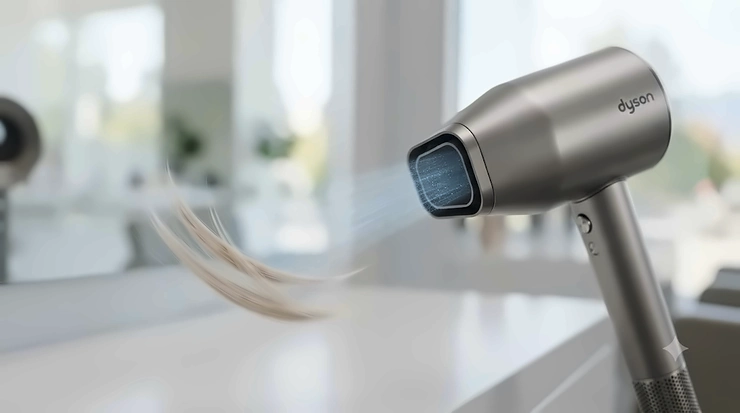
What is a salon hair dryer for fine hair? In short, it’s a professional-grade dryer engineered with lower, more precise heat settings, ionic or ceramic technology to limit cuticle damage, and a lighter body so you’re not fighting fatigue mid-blowout. The good ones borrow tech from the same AC and brushless DC motors stylists use behind the chair — just dialed in for hair that bruises easily under high heat.
Here in Canada, the stakes are a little higher than they might seem. Dry winter air pulls moisture straight out of already-thin strands, while humid summers in cities like Toronto or Vancouver introduce frizz that fine hair handles worse than thicker textures. As Wikipedia’s overview of hair dryer technology explains, these tools work by accelerating and controlling the formation of temporary hydrogen bonds within each strand, and for fine hair, that process needs a gentler hand or the bonds break down faster than they form. We dug into seven real dryers — from sub-C$50 workhorses to splurge-worthy salon names — and broke down what the spec sheets don’t tell you. Reviewers consistently note that “professional” wattage numbers mean far less than how that power is distributed, and that’s exactly where this guide gets useful.
Quick Comparison Table
| Product | Wattage | Best For | Price Range (CAD) |
|---|---|---|---|
| INFINITIPRO BY CONAIR 1875W AC Motor Dryer | 1875W | Tightest budget | Under C$50 |
| Remington PROluxe Thermaluxe AC9140 | 1875W | Heat-sensitive everyday styling | C$55–C$80 |
| BaBylissPRO Nano Titanium BNT5548 | 2000W | Fast drying without the splurge | C$60–C$90 |
| Panasonic Nanoe EH-NA65 | 1875W | Moisture retention on fine, dry-prone hair | C$120–C$170 |
| Shark HyperAIR HD102C | 1600W | Auto-adjusting heat for beginners | C$170–C$220 |
| T3 AireLuxe Professional | 1875W | Customizable salon-style control | C$260–C$310 |
| ghd Helios | 1875W | Lightest premium build, lowest hand fatigue | C$260–C$310 |
Looking at the table, there’s a clear split between the sub-C$90 cluster, which leans on AC motors and ionic generators to do the heavy lifting, and the C$170-plus tier, where brushless motors and proprietary airflow tech start showing up. If your fine hair mostly needs protection from your own impatience — cranking the dial to “scorching” because you’re late — the Remington or BaBylissPRO will get you most of the way there. If you’re chasing genuinely lower heat exposure with consistent, sensor-monitored temperatures, the jump to Panasonic or Shark territory starts to make more sense, and the two premium options exist mainly for people who dry their hair daily and want the lightest possible tool in hand.
💬 Just one click — help others make better buying decisions too! 😊
✨ Don’t Miss These Exclusive Deals!
🔍 Take your fine-hair routine to the next level with these carefully selected dryers. Click on any highlighted item to check current pricing and availability. These tools will help you create gentle, salon-quality results your strands will actually thank you for!
Top 7 Salon Hair Dryers for Fine Hair: Expert Analysis
1. INFINITIPRO BY CONAIR 1875W AC Motor Dryer — best entry point under C$50
The INFINITIPRO BY CONAIR sits at the very bottom of this list price-wise, and the standout feature is simply that it doesn’t ask you to compromise on the basics to get there. It runs on an 1875-watt AC motor — the same motor class found in dryers triple its price — paired with ceramic and ionic technology for more even heat distribution.
In practice, that AC motor matters more than the wattage number alone. AC motors tend to run cooler and last longer than the cheap DC motors found in bargain-bin dryers, which means less of that telltale “hot plastic” smell after six months of daily use. The three heat and two speed settings won’t win any innovation awards, but for fine hair, having a true low-heat option that isn’t just “slightly less hot” is what actually counts.
Based on the spec comparison, this dryer is built for people who want predictable, no-frills drying rather than smart sensors or app-connected anything — and for a lot of fine-haired Canadians on a budget, that’s exactly the point. Reviewers consistently report that the removable lint filter is genuinely easy to pop out and clean, which extends the motor’s working life noticeably compared to dryers that bury the filter under awkward screws.
✅ AC motor outlasts typical budget DC-motor dryers
✅ True low-heat setting suitable for fine, fragile strands
✅ Removable filter simplifies long-term maintenance
❌ Only two speed settings limit fine-tuning
❌ Heavier in hand than premium lightweight models
This dryer typically sits under C$50, making it one of the lowest-risk entry points into ionic drying technology — solid value if you’re testing whether lower heat actually changes how your fine hair behaves before spending more.
2. Remington PROluxe Thermaluxe AC9140 — best for heat-sensitive everyday styling
The Remington PROluxe leads with Thermaluxe Advanced Thermal Technology, a system designed to optimize heat at every setting rather than just offering a binary “hot or hotter” choice. That’s the standout, and it’s a meaningfully different approach than most dryers in its price bracket.
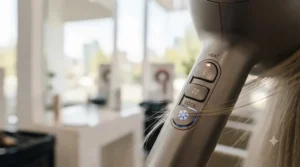
The 1875-watt AC motor drives the airflow, while a ceramic-coated grill is engineered to release more negative ions than a standard Remington dryer, aimed at reducing both heat damage and frizz simultaneously. Three heat settings and two speeds give you room to dial things back specifically for fine hair, and the cool shot button locks the style in place once you’re done — a small feature that matters disproportionately for fine strands, since they fall flat again quickly without that final cold-air seal.
What most buyers overlook about this model is the tangle-free fabric cord, which sounds minor until you’ve fought a stiff rubber cord while trying to angle a round brush near your scalp. Aggregated user feedback on this dryer’s parent line frequently mentions that the diffuser attachment runs noticeably cooler than expected, which lines up with the brand’s heat-optimization claims rather than just marketing language.
✅ Thermaluxe tech actively manages heat instead of just capping it
✅ Tangle-free cord improves control during precision styling
✅ Four-year limited warranty backs up the build quality claim
❌ Plastic housing feels less premium than the price might suggest
❌ Diffuser attachment sold separately on some bundle variants
In the C$55 to C$80 range, this is a sensible step up from rock-bottom budget dryers for anyone whose fine hair visibly sulks after a hot blow-dry.
3. BaBylissPRO Nano Titanium BNT5548 — fastest drying without the splurge
The BaBylissPRO Nano Titanium dryer’s standout is right there in the name: nano titanium technology paired with a genuinely powerful 2000-watt motor, which is unusually strong for something that typically prices under C$90.
Here’s what to weigh — that extra wattage doesn’t automatically mean more heat hitting your hair. Nano titanium particles are engineered to distribute heat more evenly across the airflow, theoretically reducing the hot spots that cause localized damage on thin strands. Combined with six heat and speed settings plus a true ion generator, this dryer gives fine-haired users enough range to find a setting that dries fast without cooking the ends.
The spec sheet won’t tell you this, but user reports suggest the lightweight 1.05-pound body is a genuine advantage during longer styling sessions — arm fatigue is an underrated reason people crank dryers to the highest, fastest setting just to finish sooner, which is precisely the wrong move for fine hair. A removable rear filter keeps performance consistent over time, something budget dryers often skip entirely.
✅ 2000W motor with six heat/speed combinations for fine-tuning
✅ Lightweight 1.05-pound design reduces fatigue-driven overheating
✅ Four-year limited protection plan included
❌ Six settings can feel overwhelming without a learning curve
❌ No diffuser included in the base bundle
Typically priced in the mid-C$60s to upper-C$80s, the BaBylissPRO Nano Titanium is arguably the best value-per-watt option in this entire roundup.
4. Panasonic Nanoe EH-NA65 — best for moisture retention on dry, fine hair
The Panasonic Nanoe EH-NA65’s standout feature is its nanoe technology: ultra-fine, negatively charged water particles that are claimed to carry roughly a thousand times more moisture than a standard ionic generator, infusing it back into hair as it dries rather than just blasting it away.
On paper this means something genuinely different from typical ionic dryers, which primarily reduce static rather than add moisture. For fine hair — which tends to dry out and go brittle faster than thicker textures because there’s simply less mass to retain hydration — that distinction matters. The dryer runs at 1875 watts with two speeds and three temperature settings (hot, warm, cool), plus a quick-dry nozzle that alternates strong and weak airflow to separate strands rather than just blasting them flat.
Aggregated review sentiment on this model, which has circulated in Canadian forums for years, leans heavily positive specifically from people with fine or thinning hair, with several long-time users explicitly preferring it over flashier competitors for daily gentleness rather than raw speed. One recurring theme in real owner discussions is that hair “isn’t overheated” even on the hot setting, a claim that lines up with the lower 1875-watt ceiling compared to some 2000W-plus rivals.
✅ Nanoe moisture infusion specifically targets dry, fragile strands
✅ Three distinct temperature settings allow real heat control
✅ Long-standing reputation among fine-hair users in Canada
❌ Availability through Canadian retailers can be inconsistent
❌ Fewer included attachments than newer competitors
Pricing for the EH-NA65 in Canada commonly lands between C$120 and C$170 depending on retailer and bundle, putting it squarely in the mid-range tier where moisture-focused tech starts to show up.
5. Shark HyperAIR HD102C — best auto-adjusting heat for beginners
The Shark HyperAIR’s headline feature is its dual optical sensors, which automatically recognize whichever attachment is connected and adjust heat and airflow accordingly — a genuinely useful standout for anyone who doesn’t want to think too hard about settings.
The 1600-watt motor is intentionally lower than some rivals, and HyperAIR IQ Technology measures outlet heat roughly a thousand times per second to maintain consistent temperature rather than letting it spike. For fine hair specifically, that consistency does more good than raw power; a dryer that holds steady at a moderate temperature beats one that surges hot every few seconds, even if the surging one technically dries faster on paper. Three manual heat and three airflow settings exist if you want to override the automation, plus a negative ion generator for frizz control.
Based on the spec comparison against the Dyson Supersonic — its most obvious rival — independent testers have found the two run at comparable wattage, though some testers noted the Shark’s results felt slightly less glossy on finer textures during side-by-side trials. What most buyers overlook is that the styling brush attachment, while versatile, can feel bulky for people with shorter or finer hair who don’t need its full reach.
✅ Auto-sensing attachments remove guesswork on heat settings
✅ Intelligent heat monitoring avoids damaging temperature spikes
✅ Cool shot button helps seal the cuticle after styling
❌ Some testers noted slightly less shine versus pricier rivals
❌ Styling brush attachment can feel bulky for finer hair
Expect to pay somewhere in the C$170 to C$220 range for the HyperAIR, which makes it a reasonable middle ground between budget AC dryers and the true premium tier above it.
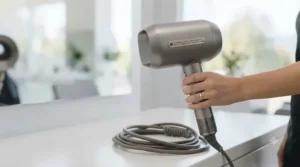
6. T3 AireLuxe Professional — best for customizable salon-style control
The T3 AireLuxe’s standout is its sheer range of control: fifteen total heat and speed combinations, built around T3’s RapidAire IQ Technology, which a smart microchip monitors to keep airflow wide and ion-rich while limiting unnecessary heat exposure.
What that means in practice is genuinely granular fine-tuning rather than the usual three-heat, two-speed setup. With five heat settings and three speeds, fine-haired users can land on a combination most dryers simply don’t offer — something between “low and slow” and “fast but still gentle.” The 1875-watt motor pushes a notably wide airflow pattern, and the brand’s own testing claims it retains significantly more of hair’s natural moisture compared to standard dryers, a claim that lines up with the consistent positive sentiment around shine and smoothness in long-term owner reviews.
A common theme in aggregated customer feedback is genuine enthusiasm from people specifically describing thin or fine hair, several explicitly calling out that their hair “looks healthy and shiny” despite daily use — though a smaller but consistent thread of complaints centers on the cord tangling more than expected and some reports of the plastic housing cracking under drops. At roughly 17 ounces, it isn’t the lightest dryer here, but independent testers have rated it comfortable enough for extended sessions without significant hand fatigue.
✅ Fifteen heat-and-speed combinations for precise low-heat styling
✅ Wide, ion-rich airflow designed to preserve natural moisture
✅ Two-year warranty extendable to three with registration
❌ Some users report the cord tangles more than expected
❌ Plastic filter cover has been noted to crack if dropped repeatedly
The T3 AireLuxe generally retails in the C$260 to C$310 range, positioning it as a genuine investment piece rather than an impulse buy — justified mainly for people who style daily and want salon-level customization at home.
7. ghd Helios — lightest premium build for daily use
The ghd Helios’s defining feature is weight: at roughly 780 grams without cord and plug, it’s about half the heft of ghd’s own older Air model, and that difference is immediately noticeable the moment you pick it up.
A brushless DC motor drives airflow rated at 75 miles per hour (around 120 km/h), concentrated through what ghd calls Aeroprecis technology — internally engineered aerodynamics paired with a contoured nozzle designed to focus heat and airflow precisely rather than scattering it broadly. For fine hair, that focus matters: a wide, unfocused blast tends to push fine strands around unpredictably, while concentrated airflow lets you direct heat exactly where it’s needed and move on quickly. Ionic technology is claimed to deliver meaningfully more shine and better hair alignment compared to standard dryers, and the brushless motor is built for a notably longer service life than typical brushed alternatives.
Here’s what to weigh, though — aggregated owner feedback is more divided than with the T3. Many reviewers describe it as the best dryer they’ve owned, praising the speed and control, but a meaningful minority with thicker or coarser hair found even the lowest setting too powerful for precise styling, occasionally describing results as “blown out” rather than smooth. For genuinely fine hair, that high baseline power is less likely to be an issue since less force is needed to move lighter strands, but it’s a real consideration worth weighing against the price tag.
✅ Significantly lighter than most premium dryers, reducing arm fatigue
✅ Brushless motor offers longer expected lifespan
✅ Focused airflow technology aids precision styling on fine hair
❌ Some reviewers with thicker hair found even low settings too powerful
❌ Among the priciest options in this entire roundup
Pricing typically falls between C$260 and C$310 depending on color and current promotions, putting it in direct competition with the T3 AireLuxe for the title of best premium salon hair dryer for fine hair.
Practical Usage Guide: Building a Gentle Heat Styling Routine
Getting salon-level results from a salon hair dryer for fine hair has less to do with the dryer itself and more to do with the thirty seconds before you even turn it on. Start by towel-drying with a microfibre towel rather than a standard cotton one — regular towels create friction that roughs up the cuticle before heat even enters the picture, and fine hair shows that damage faster than thicker textures.
Apply a heat protectant to damp hair every single time, no exceptions, and section your hair into two to four parts using clips before you start. Begin at the lowest heat setting your dryer offers and only increase if drying feels unreasonably slow; for most fine hair, low-to-medium heat combined with medium-to-high airflow speed dries just as fast as high heat at low speed, with noticeably less damage. Hold the dryer at least 15 centimetres (about 6 inches) from your scalp and keep it moving constantly rather than parking it in one spot.
For maintenance, clean the removable filter on your dryer every two to three weeks; lint buildup forces the motor to work harder, which paradoxically increases the heat reaching your hair even on a “low” setting. In the first 30 days with a new dryer, the most common mistake is sticking with the manufacturer’s default setting out of habit rather than experimenting — most of these seven models have at least three heat levels specifically because one size doesn’t fit fine hair’s needs across different seasons. Finish every session with a cool shot to flatten the cuticle and lock in shine, a step that takes ten seconds and noticeably extends how long the blowout actually lasts.
Real-World Scenarios: Matching the Right Dryer to Your Routine
The budget-conscious student. If you’re commuting to class daily and washing your hair every other morning before an 8 a.m. lecture, the INFINITIPRO BY CONAIR or Remington PROluxe make the most sense. Both dry fast enough to fit a tight schedule, and their lower price points matter when you’re also budgeting for textbooks and rent. The Remington’s Thermaluxe tech is worth the small premium over the Conair if your hair has started showing damage from years of cheap dryers in shared bathrooms.
The daily stylist with fine, dry-prone hair. If you’re blow-drying every single day, year-round, in a climate with harsh winters, the Panasonic Nanoe EH-NA65 earns its higher price through moisture retention specifically. Daily heat exposure compounds, and a dryer actively working to replace lost moisture — rather than just minimizing static — addresses a real, cumulative problem rather than a one-time inconvenience.
The professional who wants salon results at home. If you get blowouts regularly but want to stretch the time between salon visits, either the T3 AireLuxe or ghd Helios will get you closest to that result. Both offer the kind of granular heat control and airflow precision that salon stylists rely on, and for someone styling several times a week, the investment pays off faster than repeat C$60-plus blowout appointments. Volume preservation is where these two genuinely separate themselves from cheaper options — concentrated, well-engineered airflow lifts fine hair at the root rather than just drying it flat against the scalp.

Problem → Solution Guide for Fine and Thin Hair
Problem: Hair feels brittle and snaps after drying. This usually points to heat that’s too high for too long. Solution: drop down one heat setting on whichever dryer you own and increase airflow speed instead — most of these models, especially the Panasonic and T3, are built specifically to let you make that trade.
Problem: Hair looks dry and dull, never shiny. This is frequently a static and open-cuticle issue rather than a moisture issue alone. Solution: an ionic model like the BaBylissPRO Nano Titanium or ghd Helios, both of which prioritize ion output specifically to seal the cuticle flat, tends to resolve this faster than switching shampoos.
Problem: Style falls flat within an hour. Fine hair loses volume fast without a proper root-lift technique. Solution: dry upside down at the roots for the first two minutes using a concentrator nozzle, then finish with a cool shot — this is one of the most underused tricks for delicate hair care and works on any dryer in this list.
Problem: Drying takes forever and feels like a workout. Lower-wattage dryers paired with poor technique compound drying time. Solution: section hair properly and consider the BaBylissPRO’s 2000-watt motor or the Shark’s auto-sensing technology, both of which are built to cut total drying time without raising heat.
Problem: Frizz appears the moment you step outside. Humidity is reopening the cuticle after you’ve sealed it. Solution: a finishing serum plus a true cool shot, and ideally a dryer with stronger ionic output like the T3 AireLuxe, which is specifically engineered around moisture retention rather than just static reduction.
How to Choose a Salon Hair Dryer for Fine Hair
Choosing the right salon hair dryer for fine hair comes down to a handful of specific decision points rather than chasing the highest wattage number on the box.
- Prioritize multiple heat settings over raw power. A dryer with three-plus distinct heat levels gives you actual control; wattage alone tells you almost nothing about how gentle the lowest setting really is.
- Look for ionic or ceramic technology, ideally both. These reduce the static and cuticle-roughing that fine hair is especially prone to during blow-drying.
- Weigh the dryer in your hand before committing, if possible. Fatigue from a heavy dryer is one of the leading reasons people unconsciously crank up heat just to finish faster.
- Check for a true cool shot button, not just a “warm” setting mislabeled as cool — this single feature does more for lasting volume than almost anything else.
- Confirm a removable, cleanable filter. Lint buildup silently raises the effective heat your hair receives even when the dial says low.
- Match motor type to your usage frequency. AC motors generally last longer under daily use; brushless DC motors run lighter and quieter but often cost more upfront.
- Read aggregated reviews specifically from other fine-hair users, not just overall star ratings, since a dryer beloved by thick-haired reviewers can behave very differently on delicate strands. This lines up with general guidance from the Canadian Dermatology Association’s hair care recommendations, which specifically advise minimizing damage by choosing the lowest workable heat setting for blow-drying.
Common Mistakes When Buying a Low Heat Professional Dryer
The single most common mistake is assuming “low heat professional dryer” simply means lower wattage. Wattage measures motor power and airflow speed, not the actual temperature reaching your scalp — a 2000-watt dryer with well-engineered heat distribution, like the BaBylissPRO in this list, can run cooler on the strand than a 1500-watt dryer with poor thermal control.
Another frequent error is buying based on attachments rather than the dryer’s core engine. A bundled diffuser or styling brush looks appealing in product photos, but if the underlying motor and heat regulation are weak, no attachment fixes that. Shoppers also tend to underweight noise level, which sounds trivial until daily use makes a screaming motor genuinely unpleasant — something rarely mentioned on the box but frequently flagged in aggregated reviews.
Finally, many buyers skip checking warranty length entirely, treating a hair dryer as disposable. Several models here, including the Remington and BaBylissPRO, include warranties of four years, which says something meaningful about the manufacturer’s confidence in the motor’s longevity — a detail worth weighing against a cheaper, unwarrantied alternative that might need replacing within a year.
Salon Hair Dryer vs Standard Drugstore Dryer
The core difference between a true salon hair dryer for fine hair and a standard drugstore model isn’t really about top-line wattage — it’s about consistency and control. Salon-oriented dryers, even budget-friendly ones like the INFINITIPRO BY CONAIR, tend to use AC motors that maintain steadier airflow and heat over the dryer’s lifespan, while many bargain-bin dryers rely on cheaper DC motors that degrade noticeably within a year of regular use.
Standard drugstore dryers also frequently offer just one or two heat settings, with no meaningful “low” option for genuinely heat-sensitive hair. By contrast, every dryer in this guide offers at least three heat levels, and several offer far more granular control through combined heat-and-speed presets. The practical result: a fine-haired user switching from a basic drugstore dryer to even the most affordable option here, the Conair, typically notices less frizz and a softer overall finish within the first week, simply because the heat delivery is more even and the ionic technology is genuinely functional rather than a marketing footnote.
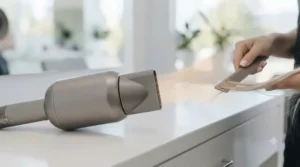
What to Expect: Real-World Performance on Fine, Thin Hair
On paper, all seven of these dryers promise smoother, shinier, frizz-free hair. In daily use, fine hair tends to respond fastest and most visibly to two factors: consistent moderate heat and proper airflow direction. Reviewers across nearly every model in this guide mention a similar pattern — visible improvement in smoothness within the first one to two uses, but the real test is whether that improvement holds up after a month of regular use rather than fading as the novelty wears off.
Expect drying time on fine hair to land somewhere between four and eight minutes depending on length and the dryer’s wattage, noticeably faster than thicker hair types regardless of which model you choose. Where the dryers genuinely diverge is in how hair looks the morning after — budget AC motor dryers tend to leave slightly more static by day two, while the ionic-heavy premium options like the T3 and ghd hold smoothness longer, a difference that becomes more obvious in drier Canadian winter air than in humid summer months.
Features That Actually Matter for a Gentle Hair Dryer for Thin Hair (And Those That Don’t)
What actually matters: multiple genuine heat settings, a functioning ion generator, a true cool shot button, and motor consistency over time. These four features directly affect how much thermal stress thin hair experiences during a typical drying session, and every dryer on this list delivers at least the basics here.
What matters less than marketing suggests: extremely high top-end wattage. Beyond roughly 1800 to 2000 watts, additional power mostly speeds up drying on thicker hair types rather than meaningfully benefiting fine strands, which dry quickly regardless. Similarly, an abundance of bundled attachments sounds valuable but rarely changes day-to-day results for fine hair specifically — a single well-designed concentrator nozzle, used correctly, outperforms a five-piece attachment kit where most pieces sit unused in a drawer.
Digital displays and app connectivity, increasingly common on premium dryers, are genuinely nice-to-haves but provide negligible practical benefit over a well-labeled physical dial — something worth remembering before paying extra purely for a screen.
Long-Term Cost & Maintenance
Looking purely at sticker price misses the bigger picture for a tool you’ll likely use multiple times a week for years. Budget dryers in the C$50 range often need replacing within 18 to 24 months of daily use, particularly if the filter isn’t cleaned regularly, while AC and brushless DC motors in the C$150-plus tier commonly last three to five years or longer under similar conditions.
Factor in that several models here — the Remington and BaBylissPRO specifically — include four-year warranties, effectively reducing the real cost-per-year even though the upfront price sits in the middle of this list. A C$70 dryer with a four-year warranty that survives its full term works out to roughly C$17.50 per year, genuinely competitive against a C$280 premium dryer expected to last five-plus years, which lands closer to C$56 per year. The math favors budget options for cost-conscious buyers, while the premium tier earns its keep primarily through daily comfort, weight, and marginally better hair condition over time rather than pure economics.
Safety, Certification & Regulations Guide
Before buying any hair dryer in Canada, confirm it carries a recognized certification mark. Per Health Canada’s guidance on electrical product safety, always check for certification marks such as CSA, cUL, or cETL before purchasing electrical products that plug into an electrical outlet, since these marks indicate the product has been assessed and conforms to the required Canadian national safety standard. All seven dryers featured here are sold through Amazon.ca or equivalent Canadian retail channels and should display one of these marks on the unit itself or its packaging — if a listing doesn’t clearly show this, it’s worth verifying before purchase.
On the heat side, dermatologists offer guidance directly relevant to fine and thin hair specifically: to minimize damage, use a cool or low heat setting to blow-dry hair, and use the lowest heat setting when heat styling more broadly. That single piece of professional guidance is essentially the thesis of this entire article, and it’s worth keeping in mind regardless of which dryer you ultimately choose. Beyond heat settings, basic appliance safety still applies — keep cords away from water, avoid use in bathrooms without proper outlet protection, and replace any dryer showing signs of cord fraying or motor overheating immediately rather than continuing to use it.

FAQ
❓ Is a low heat professional dryer actually gentler than a regular dryer?
❓ What wattage is best for fine hair?
❓ Do ionic hair dryers really reduce frizz on fine hair?
❓ How often should I replace my hair dryer?
❓ Can a salon hair dryer help with thinning hair specifically?
Conclusion
Choosing a salon hair dryer for fine hair really comes down to matching the dryer’s heat philosophy to how often you actually use it. If you’re styling occasionally on a tight budget, the INFINITIPRO BY CONAIR or Remington PROluxe deliver genuine ionic technology and real low-heat settings without the premium price tag. If you’re drying daily through harsh Canadian winters and want active moisture protection, the Panasonic Nanoe earns its mid-range price specifically through that nanoe technology. And if you’re chasing the closest thing to salon results at home, day after day, the T3 AireLuxe and ghd Helios both justify their cost through precision and reduced hand fatigue over years of use.
None of these seven dryers will magically transform fine hair into a different texture — that’s not how heat tools work, and any claim suggesting otherwise deserves skepticism. As CBC’s science-based reporting on hair health notes, repeated heat exposure causes cumulative, real damage regardless of the tool used — there’s no way around that physics. What these dryers can do, when paired with sensible technique like lower heat settings, proper sectioning, and a finishing cool shot, is meaningfully reduce that cumulative damage that turns fine hair brittle and dull over months and years of styling. Start with the option that matches your actual budget and drying frequency, not the flashiest spec sheet, and your hair will likely thank you within the first few weeks.
✨ Don’t Miss These Exclusive Deals!
🔍 Ready to upgrade your routine? Check current pricing on any of these seven picks and find the gentle, salon-quality dryer that finally works with your fine hair instead of against it.
Recommended for You
- Best Ceramic Ionic Hair Dryer Combo in Canada 2026: 7 Top Picks
- Best Hair Dryer with Cool Shot Button Canada 2026 – Top 7 Picks
- 7 Best Barber Hair Dryers in Canada (2026): Pro Buying Guide
Disclaimer: This article contains affiliate links. As an Amazon Associate, I earn from qualifying purchases. If you purchase products through these links, we may earn a small commission at no additional cost to you.
✨ Found this helpful? Share it with your friends! 💬🤗
